
The Olympic Champion Who Ate Raw Hamburger for Breakfast
At the 1904 Olympics in St. Louis, marathon runner Thomas Hicks prepared for his race with a breakfast that would horrify modern nutritionists: raw hamburger meat, washed down with a mixture of strychnine and brandy. His trainers believed the raw meat would provide immediate strength, while the strychnine—yes, the poison—would stimulate his nervous system.
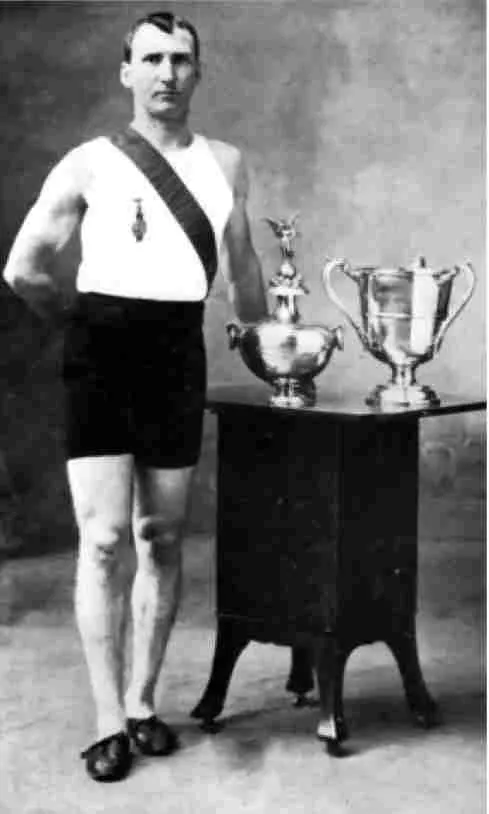 Photo: Thomas Hicks, via d2a3o6pzho379u.cloudfront.net
Hicks won the gold medal, though he nearly died doing it. During the race, his handlers fed him more strychnine, egg whites, and brandy at regular intervals. He finished the 26.2-mile race hallucinating, his body temperature dangerously elevated, carried across the finish line by his trainers.
This wasn't an isolated case of athletic insanity—it was state-of-the-art sports nutrition in 1904. Nobody knew any better because the science simply didn't exist yet.
When Smoking Was Considered Athletic Training
As recently as the 1970s, professional athletes regularly smoked cigarettes, and some coaches actually encouraged it. The reasoning seemed logical at the time: smoking expanded the lungs, which would improve oxygen capacity and endurance performance.
Boston Celtics legend Red Auerbach was famous for lighting up victory cigars on the bench during games, but lesser known is that several of his players smoked cigarettes at halftime as part of their routine. "It helped us relax," recalled one former Celtic. "The coaches told us it would open up our airways."
 Photo: Red Auerbach, via www.si.com
Even more remarkably, some endurance athletes incorporated smoking into their training regimens. French cyclist Jacques Anquetil, who won the Tour de France five times in the 1960s, was known to smoke cigarettes during long training rides. His logic: if he could perform well while smoking, imagine how much better he'd be with fully oxygenated blood during competition.
 Photo: Tour de France, via www.velowire.com
The science that would eventually prove smoking's devastating effects on athletic performance—reduced oxygen carrying capacity, impaired circulation, decreased lung function—wouldn't be widely understood until the 1980s.
The Dehydration Diet That Nearly Killed Athletes
Perhaps no nutritional myth was more dangerous than the widespread belief that athletes should avoid drinking water during competition. Coaches and trainers throughout the early-to-mid 20th century believed that water consumption during exercise would cause cramping, slow digestion, and make athletes "soft."
NFL players in the 1960s and 70s regularly practiced in full pads during brutal summer heat without access to water. Green Bay Packers coach Vince Lombardi famously forbade water breaks during practice, believing they showed weakness. Players would sneak drinks from garden hoses when coaches weren't looking.
The results were predictable and tragic. Heat stroke was common, and several high school and college athletes died from dehydration-related complications during practice. Yet the myth persisted because there was no scientific understanding of thermoregulation, electrolyte balance, or hydration's role in performance.
It wasn't until the 1970s that researchers began studying fluid replacement during exercise, leading to the development of sports drinks and modern hydration protocols that now seem obviously essential.
When Carbs Were the Enemy
The low-carbohydrate craze wasn't invented by Dr. Atkins—it dominated athletic nutrition for decades before anyone understood what carbohydrates actually did for performance. Throughout the 1950s and 60s, most coaches and trainers believed carbohydrates made athletes sluggish and overweight.
Pre-game meals typically consisted of steak, eggs, and little else. The reasoning was simple: protein built muscle, fat provided energy, and carbohydrates just made you fat. Marathon runners would eat massive steaks the morning of races, then wonder why they felt heavy and sluggish by mile 15.
This wasn't just misguided—it was metabolically backwards. Carbohydrates are the body's preferred fuel source for high-intensity exercise, and depleting glycogen stores before competition guaranteed suboptimal performance. But without understanding muscle physiology or energy systems, coaches prescribed what seemed logical rather than what actually worked.
The breakthrough came in the late 1960s when Swedish researcher Gunnar Borg began studying muscle glycogen and its relationship to endurance performance. His research led to carbohydrate loading protocols that revolutionized endurance sports—but not before generations of athletes competed at a metabolic disadvantage.
The Supplement Industry Built on Snake Oil
Before modern sports nutrition, athletes consumed a bewildering array of substances that ranged from useless to dangerous. Patent medicines promising increased strength and endurance flooded the market, with no regulation or scientific testing.
Boxers in the early 1900s consumed "beef tea"—essentially bouillon cubes dissolved in hot water—believing it would provide the strength of the bull. Baseball players chewed tobacco not just for pleasure, but because they believed it improved hand-eye coordination and reaction time.
Perhaps most bizarrely, some endurance athletes consumed small amounts of arsenic, believing it would improve their stamina. This practice, called "arsenic eating," was popular among European cyclists and runners in the late 1800s. The fact that arsenic is a deadly poison didn't deter athletes desperate for any competitive advantage.
These weren't fringe practices—they were mainstream athletic nutrition, recommended by coaches and trainers who were doing their best with the knowledge available at the time.
The Birth of Sports Science
The transformation began in the 1960s and accelerated rapidly through the following decades. Exercise physiology emerged as a legitimate field of study, bringing scientific rigor to questions about athletic performance and nutrition.
Researchers began studying muscle fiber types, energy systems, and nutrient timing. They discovered that the human body was far more complex and sophisticated than anyone had imagined, requiring specific nutrients at specific times to optimize performance and recovery.
This scientific foundation enabled the development of modern sports nutrition: carbohydrate loading for endurance events, protein timing for strength training, electrolyte replacement for hydration, and eventually, personalized nutrition based on individual genetic profiles and metabolic testing.
The $50 Billion Industry That Didn't Exist
Today's sports nutrition industry generates over $50 billion annually, employing thousands of scientists, nutritionists, and researchers. Professional teams spend millions on dietary programs, supplement protocols, and personalized nutrition plans for their athletes.
Every major university has sports nutrition specialists. High school athletes have access to better nutritional guidance than Olympic champions did 50 years ago. The transformation from raw hamburger and strychnine to precisely timed amino acid supplementation represents one of the most dramatic evolutions in athletic preparation.
What We Lost and Gained
The evolution from nutritional superstition to sports science solved obvious problems—fewer athletes dying from dehydration, better performance through proper fueling, longer careers through optimized recovery. But it also changed the fundamental relationship between athletes and their bodies.
The intuitive approach that once defined athletic preparation—eat what feels right, drink when thirsty, rest when tired—has been replaced by data-driven precision. Modern athletes consume calculated macronutrient ratios, time their supplements to the minute, and monitor biomarkers that didn't have names 50 years ago.
We've gained performance optimization but lost some of the simplicity that once made athletic achievement seem more human and accessible. The distance between Thomas Hicks's strychnine-fueled marathon and today's precisely calibrated endurance protocols represents more than scientific progress—it reflects our evolving understanding of human potential and the price we're willing to pay to unlock it.
Whether that's progress depends on what you value more: the perfect performance or the perfectly human struggle of athletes figuring it out as they went along.