They Called It a Carnival Trick: The Long, Stubborn Fight to Bring Lights to Major League Baseball
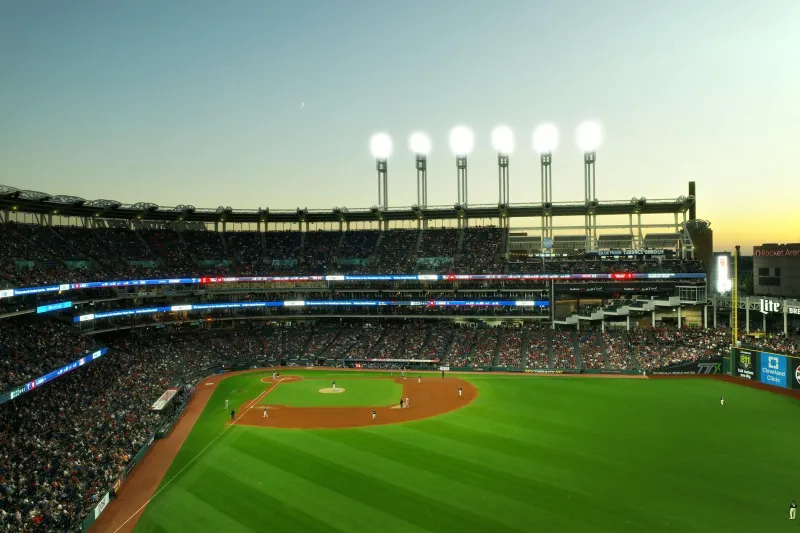
They Called It a Carnival Trick: The Long, Stubborn Fight to Bring Lights to Major League Baseball
On a warm evening in May 1935, President Franklin D. Roosevelt sat in the White House and pressed a button. Nearly 700 miles away, at Crosley Field in Cincinnati, 632 electric lights flickered on and bathed a baseball diamond in artificial light for the first time in Major League Baseball history. The Reds beat the Phillies 2–1. The crowd of nearly 25,000 went home happy.
And then the rest of the league spent the next decade pretending it hadn't happened.
The arrival of night baseball is one of those stories that sounds like a minor logistical footnote until you look at it closely. Then it becomes something else entirely — a window into how deeply American sports institutions resist change, how economics eventually bulldoze tradition, and how the game millions watch on prime-time television today almost didn't exist in that form at all.
Daylight Was a Feature, Not a Limitation
To understand the resistance, you have to understand what baseball's power structure believed about itself in the 1930s. The sport's owners and commissioners didn't just think of baseball as a business. They thought of it as an institution — a cultural cornerstone with a dignity to be protected. Daytime games weren't a scheduling constraint. They were part of the identity.
The argument against night games had a few distinct flavors. There was the aesthetic objection: baseball was meant to be played in sunlight, in the open air, in the tradition of the game's pastoral origins. There was the competitive objection: artificial lighting was uneven, shadows were unpredictable, and playing under lights introduced variables that distorted the purity of the contest. And then there was the class objection, which nobody stated quite that bluntly but which hummed underneath everything else — that night games would attract a different, rowdier crowd, the kind of people who couldn't get off work during the day.
Commissioner Kenesaw Mountain Landis was famously skeptical. Several ownership groups treated the whole concept as beneath them. The Yankees — then as now deeply attached to their own mythology — wouldn't install lights at Yankee Stadium until 1946. The Cubs held out even longer. Wrigley Field didn't get permanent lights until 1988.
The Minor Leagues Saw It First
While the majors were busy protecting their dignity, the minor leagues had already figured out something important: night games made money.
The first professional night game under permanent lights took place in Independence, Kansas, in 1930. Minor league teams across the country quickly caught on. Attendance at night games dramatically outpaced afternoon games, for the simple reason that working people could actually attend them. A factory worker in Cincinnati or a clerk in Des Moines couldn't take a Tuesday afternoon off to watch baseball. But a Tuesday night game was a different proposition entirely.
The economics were not subtle. Night games drew bigger crowds. Bigger crowds meant more revenue. The minor leagues, operating on thin margins, needed that revenue badly. They didn't have the luxury of protecting an image.
The majors, flush with the revenues that came with being the majors, could afford to be precious about it — for a while.
The Depression Changed the Calculus
The Great Depression did what logic and attendance data couldn't: it made the financial argument impossible to ignore. Baseball was not immune to the economic collapse of the 1930s. Attendance dropped. Franchises struggled. The romantic notion that the sport was above commercial concerns started to look a lot less romantic when the books didn't balance.
Cincinnati's decision to install lights in 1935 was driven by a general manager named Larry MacPhail, who had seen night baseball work in the minors and wasn't interested in ideology when he had a struggling franchise to save. He lobbied, pushed, and eventually got permission from the league — with a strict limit of just seven night games per season, a compromise designed to signal that this was a concession, not a conversion.
It worked. Attendance spiked. Other teams noticed.
MacPhail moved on to Brooklyn, installed lights at Ebbets Field, and watched the same thing happen again. The evidence kept piling up. Night baseball drew fans. Daytime-only baseball, for a team trying to survive economically, was starting to look less like a tradition and more like a handicap.
From Concession to Prime Time
The transformation from reluctant accommodation to full embrace happened gradually, then suddenly. By the late 1940s and through the 1950s, most major league stadiums had lights. Television accelerated everything. Broadcasters didn't want afternoon games competing with the workday. Advertisers wanted prime-time audiences. The sport that had once treated nighttime play as a carnival sideshow was now scheduling its most important games specifically to maximize evening viewership.
Today, the World Series is almost entirely a prime-time event. Game times are set with television ratings in mind first and everything else second. The average first pitch in the Fall Classic now routinely comes after 8 p.m. Eastern — a scheduling choice that generates enormous advertising revenue and simultaneously draws complaints from fans on the East Coast who can't keep their kids awake through the seventh inning.
The tension between tradition and commerce that defined the lights debate never actually resolved. It just shifted. The owners who once resisted night games to protect baseball's image now schedule night games to protect baseball's revenue. The instinct is the same. Only the direction changed.
What the Resistance Tells Us
Look back at the arguments against night baseball and it's hard not to notice how familiar they sound. Every major change in American sports — the designated hitter, expansion teams, wild card playoffs, replay review — has been met with the same basic resistance: this isn't how it's supposed to be, this cheapens the game, this is a concession to commercial interests at the expense of something pure.
Sometimes those arguments have merit. Sometimes they're just the sound of an institution protecting itself from the future.
In the case of stadium lights, history delivered a pretty clear verdict. The game didn't lose its soul when the lights came on. It found a much larger audience. And the working-class fans who couldn't make a Tuesday afternoon game — the ones the old guard seemed vaguely suspicious of — turned out to be the backbone of the sport's popularity for the next half century.
Roosevelt pressed that button in 1935, and baseball spent years pretending he hadn't. Then it built its entire prime-time identity around the thing it once called a gimmick.