The Most Feared Hitter You've Never Heard Of
In 1915, if you asked any baseball fan who hit the most home runs in the game, they'd tell you about Gavvy Cravath without hesitation. The Philadelphia Phillies outfielder had just completed his third straight season leading the National League in homers, and his career total of 116 round-trippers was the stuff of legend. Sports writers called him "Cactus" for his prickly personality, but fans knew him as the most dangerous hitter alive.
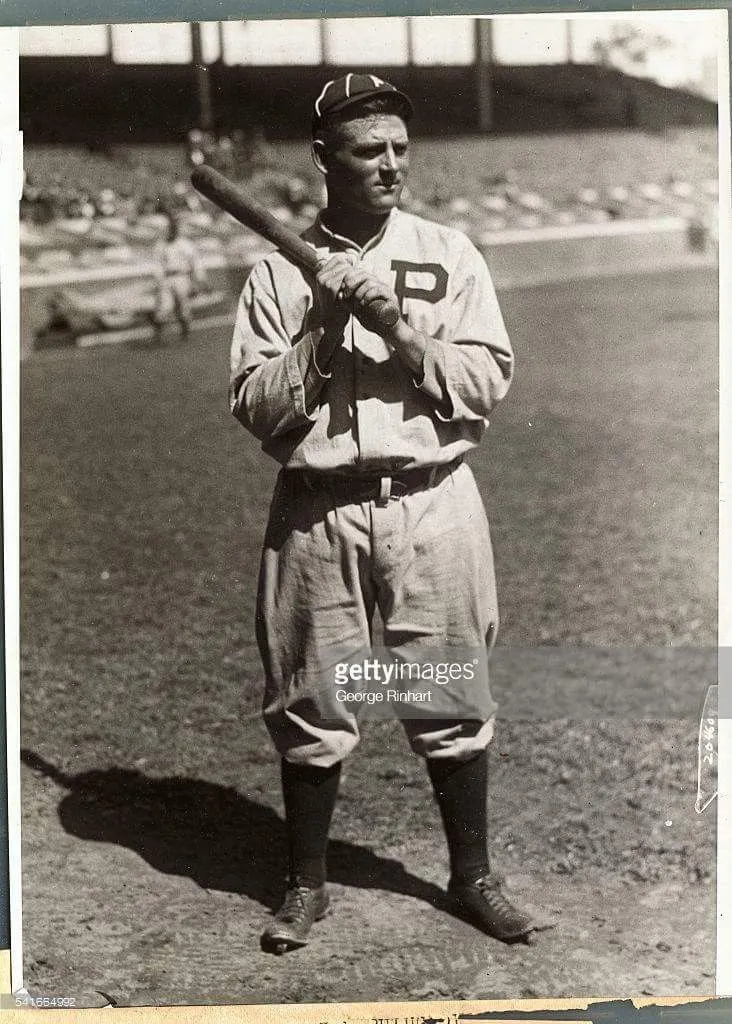 Photo: Gavvy Cravath, via i.pinimg.com
Then Babe Ruth happened, and suddenly Gavvy Cravath became a footnote.
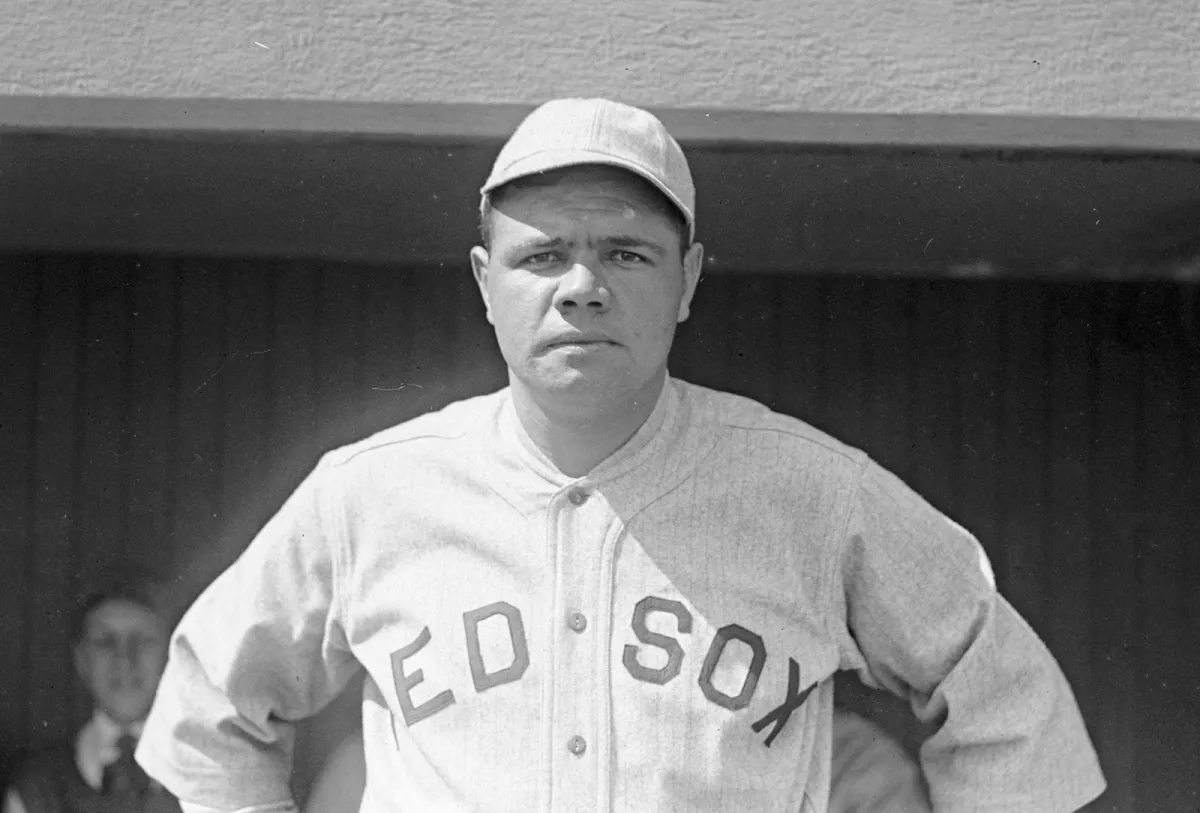 Photo: Babe Ruth, via cdn.britannica.com
When 24 Home Runs Made You Superman
To understand just how dramatically baseball changed in the span of a few years, you need to appreciate what passed for power hitting before Ruth picked up a bat. Cravath's best season came in 1915, when he clubbed 24 home runs for Philadelphia. That number didn't just lead the league — it absolutely destroyed the competition. The second-place finisher that year hit 12.
Twenty-four home runs in 1915 was like hitting 70 today. It was a number so absurd that opposing pitchers would intentionally walk Cravath with the bases empty rather than risk giving up another moonshot. Fans bought tickets specifically to watch him hit, and newspapers ran special coverage every time he stepped into the batter's box.
Cravath's swing was perfectly designed for the dead-ball era. He was a gap-to-gap hitter who had learned to turn on inside pitches and drive them over the short right-field fences that were common in that period. At Philadelphia's Baker Bowl, the right-field wall was just 280 feet from home plate, and Cravath became a master at exploiting that cozy dimension.
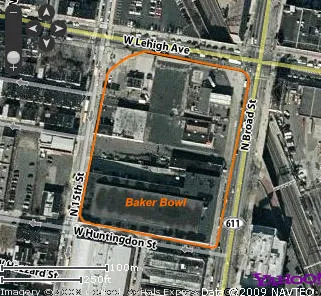 Photo: Baker Bowl, via www.ballparksofbaseball.com
The Revolution That Made Yesterday's Giant Look Small
When Babe Ruth transitioned from pitching to hitting full-time in 1919, he immediately hit 29 home runs — more than Cravath's career-best season. But that was just the warm-up act. In 1920, Ruth absolutely obliterated every conception of what was possible with a baseball bat, launching 54 home runs in a single season.
To put that in perspective: Ruth hit more home runs in 1920 than 14 of the 16 major league teams combined. He out-homered entire franchises by himself. The St. Louis Browns, as a team, hit 50 home runs that season. Ruth hit 54.
The gap between Cravath's peak and Ruth's explosion wasn't just mathematical — it was philosophical. Cravath represented the pinnacle of scientific hitting in the dead-ball era, a player who had maximized every advantage available to him. Ruth represented something entirely new: raw power that could turn any at-bat into a potential home run, regardless of the ballpark dimensions or the situation.
The Technology Behind the Transformation
What made Ruth's revolution possible wasn't just his natural ability — it was the baseball itself. The "dead ball" era got its name from the actual baseballs used during Cravath's prime years. These balls were softer, less tightly wound, and often stayed in play for entire games, becoming increasingly scuffed and difficult to hit with authority.
Starting in 1920, baseball introduced a livelier ball with tighter winding and better materials. Suddenly, balls that would have been routine fly outs in Cravath's era were sailing over outfield walls. The same swing that made Cravath a superstar in 1915 would have made him merely above-average in 1920.
Ruth also represented a completely different approach to hitting. Where Cravath and his contemporaries focused on making contact and using the entire field, Ruth swung for the fences on every pitch. He struck out far more than any respectable hitter of the previous era would have tolerated, but when he connected, the results were unlike anything baseball had ever seen.
When Legends Become Footnotes
By 1925, Ruth had hit more home runs in six seasons than Cravath had managed in his entire 11-year career. The record that had taken Cravath over a decade to build was demolished so thoroughly that most fans forgot it had ever existed.
Cravath retired in 1919, just as the power revolution was beginning. He had no way to know that everything he had accomplished was about to be rendered quaint by a pitcher-turned-outfielder who would redefine what it meant to hit for power.
Today, Cravath's name appears in baseball reference books as a curiosity — the answer to trivia questions about who held various records before Ruth. But for nearly a decade, he was the most feared hitter in baseball, a player whose power numbers seemed almost supernatural to fans who had grown up watching games decided by bunts and stolen bases.
The Speed of Sporting Evolution
The Cravath-to-Ruth transition reveals something profound about how quickly sports can evolve. In the span of just a few years, baseball went from a game where 10 home runs made you a power threat to one where 30 was merely respectable. The shift wasn't gradual — it was practically overnight.
This same pattern has repeated throughout sports history. Records that seemed untouchable for decades get shattered so completely that we forget they ever mattered. The four-minute mile was an impossible barrier until Roger Bannister broke it in 1954, and now high school runners regularly run faster times.
Gavvy Cravath was the greatest power hitter of his era, a player whose home run totals seemed almost mythical to his contemporaries. Then baseball changed around him, and suddenly he became a relic of a different game entirely. His story is a reminder that in sports, yesterday's impossible can become tomorrow's starting point faster than anyone expects.