Five Dollar Clubs and Fifty Cent Balls: When Golf Gear Cost Less Than a Tank of Gas
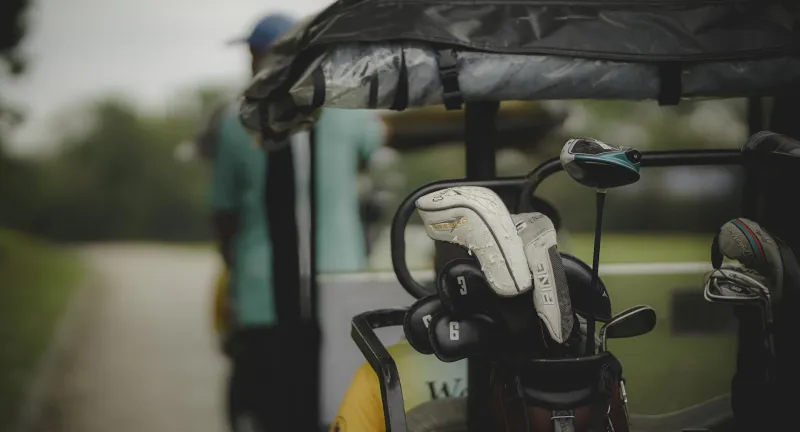
Walk into any pro shop today and prepare for sticker shock. A single driver can cost $600. A full set of irons? Easily $1,500. Add in the latest putter technology, premium balls, and a bag to carry it all, and you're looking at a $4,000 investment before you've played your first round.
Your grandfather would have laughed at those numbers. In 1950, he could outfit himself completely for about $35 — roughly what you'd pay for a dozen premium golf balls today.
When Hardware Stores Sold Golf Clubs
Back then, golf equipment lived in the sporting goods section right next to the fishing tackle and baseball gloves. Clubs were simple affairs: steel shafts, basic grips, and heads forged from carbon steel. No titanium, no composite materials, no computer-aided design. Just functional tools that got the job done.
A decent set of eight clubs — driver, fairway wood, five irons, and a putter — ran about $25 to $30. The most expensive single club you could buy was maybe $8, and that was for something fancy. Most golfers carried far fewer clubs than today's 14-club limit, partly because the rules were different, but mostly because buying more clubs meant spending more money they didn't have.
Golf balls told the same story. A dozen balls cost around 50 cents, and they were simple rubber-core spheres wrapped in balata and covered with a basic dimple pattern. No multi-layer construction, no urethane covers, no aerodynamic optimization. They flew shorter distances and got cut up easier, but they also didn't require a second mortgage.
The Technology Revolution That Changed Everything
The shift began in the 1970s when manufacturers started experimenting with new materials. Graphite shafts appeared first, promising lighter weight and more flex. They cost significantly more than steel, but early adopters were willing to pay for the perceived advantage.
Then came the real game-changer: metal woods in the 1980s. TaylorMade's first metal driver looked revolutionary compared to traditional persimmon wood, and it performed differently too. Suddenly, golf equipment wasn't just about craftsmanship — it was about engineering.
The 1990s brought titanium drivers, which were lighter and stronger than steel but cost exponentially more to manufacture. A titanium driver that cost $300 in 1995 would be considered a bargain today, but it represented a 10x price increase over what golfers had been paying just a decade earlier.
Custom Fitting: When One Size Stopped Fitting All
Perhaps nothing illustrates the transformation more than custom fitting. In 1950, you bought clubs off the rack. Tall, short, strong, weak — everyone swung the same basic specifications. The only customization was maybe cutting down a shaft if you were particularly short.
Today's golfers get launch monitor sessions that measure ball speed, spin rate, and launch angle. They test different shaft flexes, lie angles, and grip sizes. Some fittings take hours and cost hundreds of dollars before you've even ordered the clubs.
This precision comes at a premium. Custom-fitted irons can easily cost $200-300 per club, compared to the $3-4 per club your grandfather paid. The technology is undeniably more sophisticated, but it's also priced accordingly.
The Ball That Flies Too Far
Modern golf balls represent perhaps the most dramatic evolution in equipment. Today's multi-layer designs with urethane covers and optimized dimple patterns can cost $5-6 each. They fly farther, spin more controllably, and last longer than their ancestors.
But they've also fundamentally changed the game. Courses have had to be lengthened repeatedly to maintain challenge levels. What was once a 6,500-yard championship course is now considered short. The ball technology that costs 10x more has forced golf course architecture to evolve, often at enormous expense.
Did All That Money Actually Help?
Here's the uncomfortable truth: despite spending exponentially more on equipment, the average American golfer hasn't gotten meaningfully better. The USGA reports that average handicaps have remained essentially flat for decades, hovering around 14-15 for men and 27-28 for women.
Your grandfather, swinging his $5 driver and hitting 50-cent balls, probably scored about the same as you do with your $3,000 setup. The equipment has gotten dramatically better at extracting maximum performance, but most recreational golfers don't swing consistently enough to benefit from those marginal gains.
The Price of Progress
The transformation of golf equipment reflects broader changes in American consumer culture. We've moved from buying tools that lasted decades to upgrading technology every few years. Golf manufacturers now release new driver models annually, each promising to add precious yards to your drive.
This cycle has made golf more expensive to enter and maintain. A beginner in 1950 could get started for less than $50 total. Today, that same newcomer faces an initial investment of hundreds or thousands of dollars, creating barriers that didn't exist when the game was simpler.
The Bottom Line
Modern golf equipment represents genuine technological achievement. Today's clubs are marvels of materials science and engineering, optimized through computer modeling and wind tunnel testing. They're objectively superior to what previous generations played.
But they've also transformed golf from an accessible pastime into an equipment arms race. The question isn't whether today's gear is better — it clearly is. The question is whether it's $3,000 better, and whether all that technology has actually made the game more enjoyable for the average player.
Your grandfather might have scored the same with his simple steel clubs, but at least he didn't have to explain the credit card bill to your grandmother.