Handshakes and Hunches: When NFL Teams Built Championship Rosters on Coffee Shop Conversations
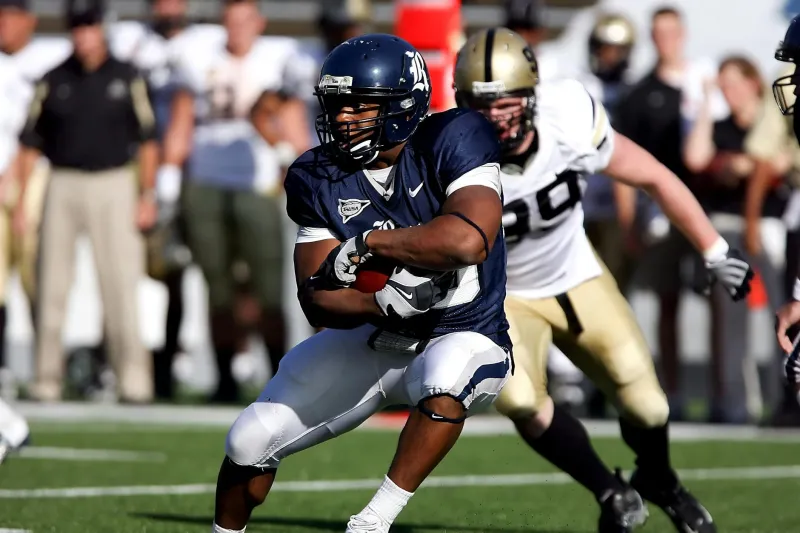
In 1979, Dallas Cowboys scout Red Hickey discovered Tony Dorsett not through GPS tracking data or biomechanical analysis, but because a college coach mentioned over coffee that he'd "seen something special" in a kid from Pennsylvania. That casual conversation helped build a dynasty. Today, NFL teams spend millions on analytics departments, but some of the greatest players in history were found through nothing more sophisticated than a firm handshake and a good feeling.
 Photo: Dallas Cowboys, via gisgeography.com
The Art of the Eye Test
Before the NFL Combine became football's most important job fair, scouts were lone wolves armed with nothing but notebooks, stopwatches, and decades of accumulated wisdom. They'd drive hundreds of miles to watch a single practice, then make million-dollar recommendations based on how a player carried himself between drills.
Bill Parcells, the legendary Giants and Patriots coach, famously built his evaluation system around "looking them in the eye." He believed you could tell more about a player's character from a five-minute conversation than from any statistical analysis. His scouts weren't hunting for measurable metrics; they were searching for intangibles that couldn't be quantified – heart, intelligence, and the mysterious quality coaches called "football sense."
 Photo: Bill Parcells, via static0.topspeedimages.com
These evaluations happened in hotel lobbies, campus cafeterias, and small-town diners. A scout might spend three hours talking to a player's high school coach, his girlfriend, and the local barber to understand what kind of person they were considering. The question wasn't just "Can he play?" but "Will he show up when everything's on the line?"
The Whisper Network
Professional football operated on relationships that took decades to build. A scout's most valuable asset wasn't his database or his measuring tape – it was his Rolodex. College coaches, high school mentors, and former players formed an informal intelligence network that determined which prospects got serious consideration.
Chuck Noll, who built the Pittsburgh Steelers' 1970s dynasty, relied heavily on tips from coaches he trusted. When a respected college coach called to say "You need to look at this kid," that phone call carried more weight than any statistical breakdown. These conversations happened at coaching clinics, in airport bars, and during chance encounters at high school games.
The most successful scouts cultivated sources everywhere. They'd befriend equipment managers, academic advisors, and team chaplains – anyone who saw players when they thought nobody was watching. A cafeteria worker's observation about how a player treated the cleaning staff could influence a draft decision more than his 40-yard dash time.
Film Study in the Stone Age
Before digital video and cloud storage, studying game film was a physical, time-consuming process. Scouts carried 16mm projectors in their car trunks, setting up makeshift viewing rooms in hotel rooms and college offices. They'd watch the same play dozens of times, manually rewinding and fast-forwarding to catch details that might reveal a player's true ability.
These film sessions were social events. Scouts from different teams would often watch together, sharing observations and debating what they'd seen. The conversations that emerged from these sessions were as valuable as the film itself. An experienced scout might point out something a younger evaluator had missed, or offer context about a player's background that explained an unusual play.
The physical limitations of film study meant scouts had to be more selective about what they watched. They couldn't analyze every snap from every angle like today's analysts. Instead, they developed an intuitive ability to spot the key moments that revealed a player's character and ability.
The Gut Check Era
Draft decisions in the pre-analytics era came down to a room full of coaches and scouts arguing about their feelings. There were no algorithmic models to consult, no predictive analytics to reference. Teams made million-dollar decisions based on passionate advocacy from scouts who'd spent months getting to know their prospects as people.
These draft room debates were legendary for their intensity. A scout might stake his reputation on a small-school quarterback nobody else had heard of, arguing that the player's leadership and intelligence mattered more than his arm strength or college statistics. General managers had to weigh competing instincts and decide which scout's gut feeling to trust.
Some of the NFL's greatest success stories emerged from these heated arguments. Tom Brady's selection in the sixth round happened because one Patriots scout refused to give up on a player everyone else thought was too slow and too weak. That scout's persistence, based on nothing more than his belief in Brady's competitiveness, changed football history.
 Photo: Tom Brady, via modellingcentre.gr
The Relationship Revolution
The most successful teams of the pre-analytics era understood that football was ultimately about people, not numbers. They invested heavily in building relationships throughout the football community, creating networks of trust that gave them access to information their competitors couldn't buy.
Bill Walsh's San Francisco 49ers were masters of this approach. Walsh personally maintained relationships with coaches at every level of football, from Pop Warner to the pros. When he needed to find a specific type of player, he could call coaches across the country who knew exactly what he was looking for and would recommend players who fit his system.
These relationships were built on mutual respect and reciprocity. NFL scouts would help college coaches by providing feedback on their players, sharing insights about professional football, and occasionally offering job opportunities. In return, college coaches would be honest about their players' strengths and weaknesses, helping scouts make better decisions.
The Digital Disruption
Today's NFL operates in a completely different universe. Teams employ data scientists, biomechanics experts, and sports psychologists. They track every movement, measure every metric, and analyze every decision through multiple statistical lenses. The gut feelings and personal relationships that once drove the draft have been largely replaced by algorithms and spreadsheets.
Modern prospects are evaluated through GPS tracking, heart rate monitoring, and cognitive testing. Teams know how fast a player runs, how high he jumps, and how quickly he processes information. They can predict injury risk, performance decline, and positional fit with unprecedented accuracy.
The NFL Combine has become a scientific showcase where players' bodies and minds are dissected by experts using equipment that would have seemed like science fiction to scouts from the 1970s. Every measurement is recorded, every drill is timed, and every interview is analyzed for psychological insights.
What the Numbers Can't Measure
Despite all the technological advances, some NFL teams are rediscovering the value of old-school evaluation methods. They're learning that character, leadership, and football intelligence – the intangibles that old-school scouts prized – remain crucial for success.
The human element that drove draft decisions for decades hasn't become irrelevant; it's become harder to measure and easier to overlook. In an era of information overload, the simple wisdom of experienced scouts who trusted their instincts sometimes produced better results than the most sophisticated analytical models.
As the NFL continues to evolve, the most successful teams are finding ways to combine analytical precision with the human insights that built the league's greatest dynasties. They're learning that while technology can measure almost everything about a football player, it still takes human judgment to understand what those measurements actually mean.