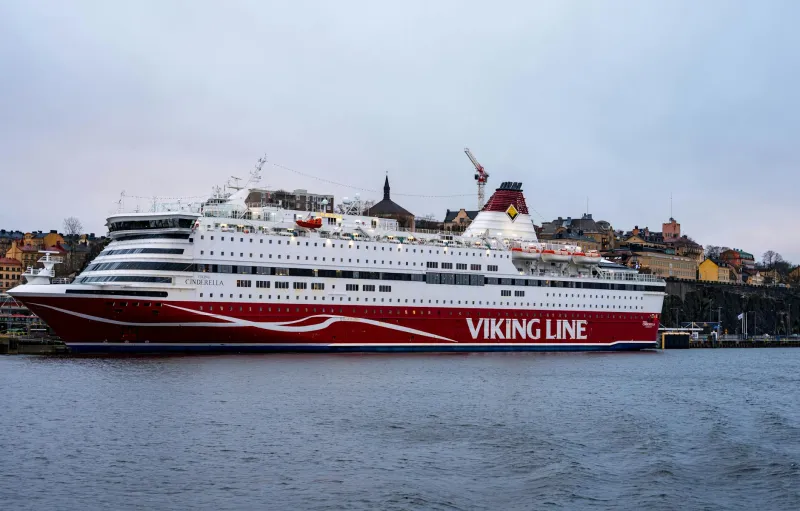
In 1925, American tennis champion Bill Tilden departed New York Harbor aboard the SS Olympic, bound for Wimbledon. His journey would consume six weeks of his life – five days crossing the Atlantic, two weeks of European tournaments to justify the expense, two weeks at Wimbledon itself, then five more days sailing home. By contrast, modern players fly overnight from JFK to Heathrow, play their matches, and return home within ten days.
This wasn't just inconvenient – it fundamentally shaped who could compete internationally and how they performed when they got there.
The Ordeal of Ocean Travel
Transatlantic passage in the 1920s and 1930s meant five to seven days aboard steamships that, despite luxury accommodations for first-class passengers, offered no opportunity for serious athletic training. Tennis players couldn't practice their serves on rolling decks. Track athletes couldn't maintain their conditioning in cramped quarters. Swimmers had access only to small shipboard pools unsuitable for serious training.
Worse, many athletes arrived seasick and physically depleted. The ocean crossing often left competitors struggling with what we now recognize as jet lag's predecessor – the disorientation of disrupted sleep schedules, unfamiliar food, and days without proper exercise.
American track star Jesse Owens later described his 1936 voyage to the Berlin Olympics: "By the time we reached Germany, I felt like I hadn't run in weeks. My legs were stiff, my timing was off, and I had to spend precious days just getting my body back to normal."
The Economics of Distance
Ocean travel didn't just cost time – it cost enormous amounts of money that eliminated most potential competitors. A first-class round-trip ticket from New York to Southampton cost approximately $400 in 1930, equivalent to roughly $6,000 today. For athletes who weren't independently wealthy, international competition was simply impossible.
This created a bizarre dynamic where American tennis, track, and golf were represented abroad almost exclusively by athletes from wealthy families or those sponsored by private clubs. Working-class athletes, no matter how talented, rarely competed internationally simply because they couldn't afford the journey.
The U.S. Olympic Committee regularly struggled to fund travel for entire teams. In 1924, the American Olympic team traveled to Paris aboard a converted cargo ship to save money, with athletes sleeping in dormitory-style quarters and training on deck during the crossing.
Strategic Scheduling Around Ships
International athletic calendars were built entirely around steamship schedules. Wimbledon's timing in late June and early July wasn't arbitrary – it coincided with optimal Atlantic crossing conditions and allowed American players to participate in the European clay court season before returning for the U.S. championships in September.
Tennis players developed elaborate European tours to justify the expense and time of crossing. A typical American player's European summer might include tournaments in Monte Carlo, Paris, London, and several smaller events – not because they wanted to play all these tournaments, but because they had to make the six-week journey worthwhile.
Track and field athletes faced even more complex logistics. The European track season was compressed into a brief summer window, forcing American athletes to choose carefully which events justified the enormous investment in time and money.
The Physical Toll of Travel
Modern sports science recognizes that long-distance travel disrupts athletic performance in measurable ways. But early 20th-century athletes had no understanding of circadian rhythms, dehydration effects, or proper recovery techniques. They simply knew they felt terrible after ocean crossings and had to figure out recovery on their own.
Tennis great Helen Wills Moody, who won eight Wimbledon singles titles, developed elaborate shipboard routines to maintain fitness during Atlantic crossings. She practiced shadow strokes on deck, ran laps around the ship's perimeter, and followed strict dietary regimens to combat the effects of shipboard inactivity.
Many athletes arrived in Europe weeks before competition just to recover from the journey. This created additional expenses and time commitments that further limited participation to the wealthy elite.
When Geography Meant Everything
The most profound difference was how ocean travel created genuine separation between continents. American and European athletes developed distinctly different playing styles and techniques because they rarely competed against each other. Tennis strokes, track techniques, and training methods evolved independently on different sides of the Atlantic.
This isolation meant international competitions carried genuine mystery and excitement. When American tennis players arrived at Wimbledon, they brought techniques and strategies that European players had never seen. Similarly, European innovations remained unknown in America until the next wave of travelers crossed the ocean.
The Jet Age Changes Everything
Commercial aviation transformed international sport almost overnight. By 1960, athletes could fly from New York to London in eight hours instead of sailing for six days. The cost dropped dramatically, and the physical toll nearly disappeared.
Suddenly, international competition became routine rather than extraordinary. Athletes could compete in Europe one week and America the next. Playing styles began to homogenize as competitors faced each other regularly. The mystery and isolation that had defined international sport for decades vanished.
Today's Global Game
Modern tennis players think nothing of flying from Miami to Indian Wells to Monte Carlo to Madrid to Rome to Paris to London within two months. They travel with teams of coaches, trainers, and support staff. They arrive fresh, compete immediately, and maintain peak physical condition throughout.
Serena Williams played tournaments on four continents in 2015 without missing a beat. Rafael Nadal's annual schedule includes events in Australia, North America, South America, Europe, and Asia – a travel itinerary that would have been impossible for any athlete before 1960.
The infrastructure of modern international sport – ranking systems, global tours, standardized equipment, and unified rules – exists only because jet travel eliminated the geographic barriers that once made international competition an epic undertaking rather than a routine business trip.
When we watch today's global sporting events, it's easy to forget that the ease of international competition is a recent invention. For most of sports history, getting there really was half the battle – and often the harder half.