The Coin Flip That Changed Boxing Forever
On September 23, 1952, Rocky Marciano threw what appeared to be the knockout punch that would make him heavyweight champion of the world. Jersey Joe Walcott crumpled to the canvas in the 13th round, and referee Charley Daggert began his count. But in the chaos of the moment, with 40,000 fans screaming and camera flashes popping, Daggert lost track of his count.
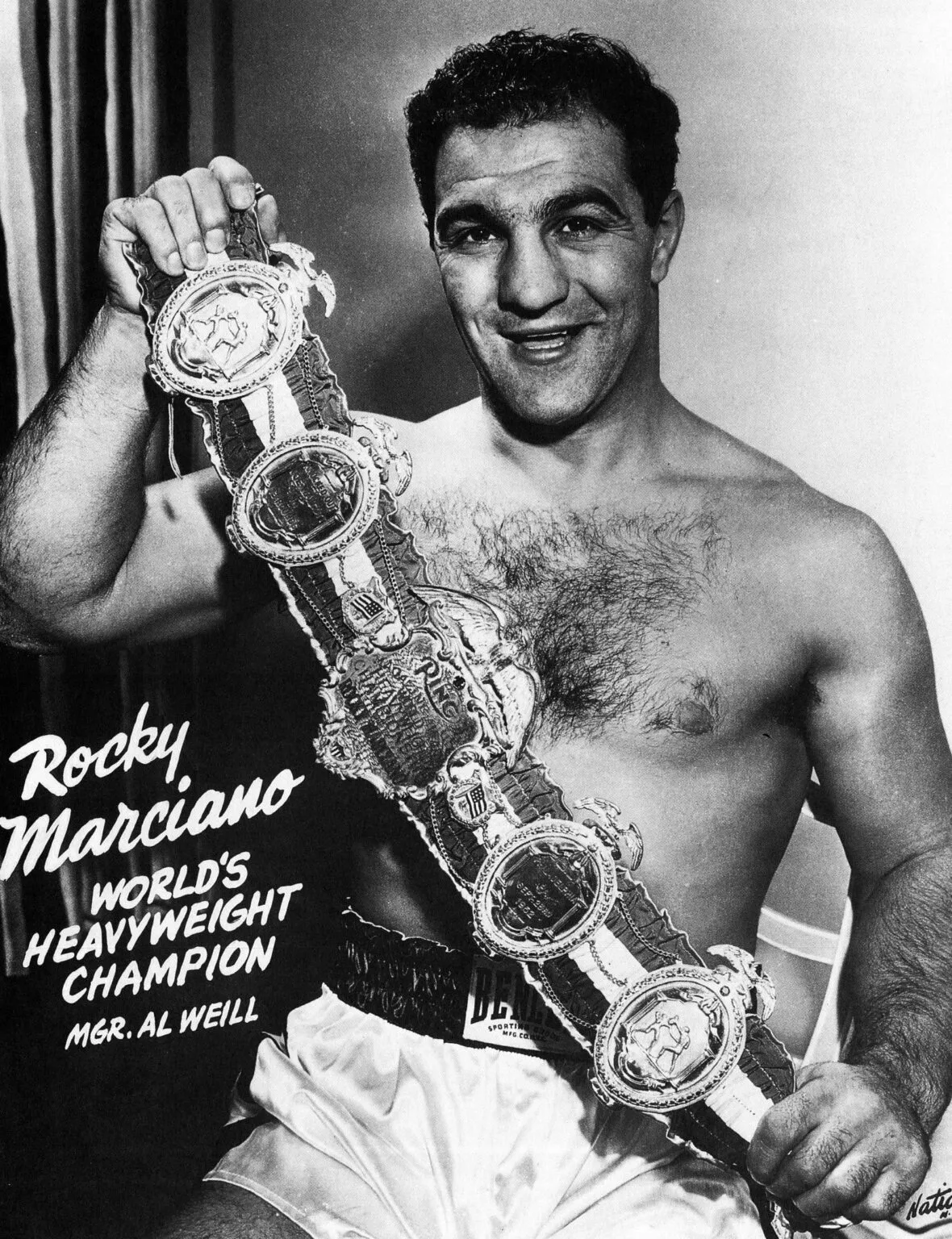 Photo: Rocky Marciano, via theusaboxingnews.com
He later admitted he wasn't sure if he'd counted to eight or ten when Walcott tried to get up. In that split second of uncertainty, with no video replay to consult and no technology to help, Daggert made a judgment call that would define both fighters' legacies forever. He ruled it a knockout. Marciano became champion.
Today, that fight would be reviewed from twelve different camera angles, analyzed frame by frame, and the exact moment of impact would be timed to the millisecond. But in 1952, the most important fight in boxing came down to one man's best guess.
When Football Games Ended on Eyeball Estimates
Before the NFL introduced instant replay in 1986 (then removed it, then brought it back again), football officials made goal-line calls using what they called "the best available angle"—which was often no angle at all. Referees would sprint toward pile-ups of 300-pound men, peer through a tangle of arms and legs, and somehow determine whether a football had crossed an invisible line.
The 1972 AFC Championship game between Pittsburgh and Oakland featured what became known as the "Immaculate Reception"—Franco Harris's miraculous touchdown catch that's still debated today. Did the ball deflect off an Oakland defender or Pittsburgh receiver Jack Tatum? The rules said it mattered enormously, but referee Fred Swearingen had to make the call based on what he thought he saw in real time.
Swearingen later admitted he wasn't entirely sure what happened. "I saw what I saw," he said years later, "and I made the call." That call sent Pittsburgh to the Super Bowl and changed NFL history. Today, the same play would be dissected by multiple camera angles, super slow-motion replay, and probably a committee of officials in New York.
The Strike Zone That Changed With the Umpire's Mood
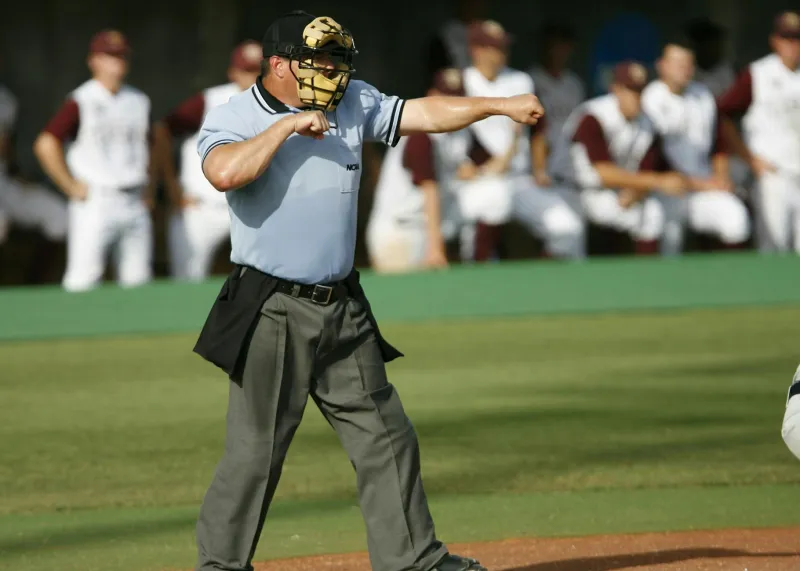
Baseball's strike zone was once as much about psychology as precision. Before computer-assisted umpiring systems like PITCHf/x, home plate umpires called balls and strikes based on their personal interpretation of a zone that supposedly extended from the batter's knees to his chest.
But "knees to chest" meant different things to different umpires. Some had tight zones, some generous ones. Ron Luciano, who umpired from 1968 to 1980, later admitted his strike zone changed based on how he felt about the pitcher. "If I liked the guy, he got the benefit of the doubt," Luciano wrote in his memoir. "If I didn't, well, he better throw it right down the middle."
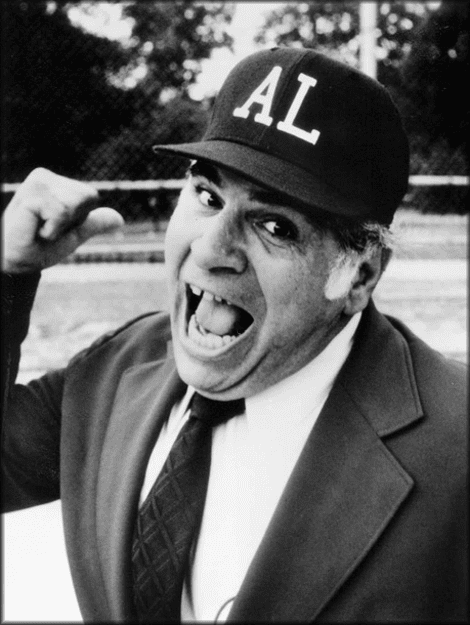 Photo: Ron Luciano, via alchetron.com
This wasn't corruption—it was human nature. Without technology to provide objective feedback, umpires developed their own standards and stuck with them. Earl Weaver, the fiery Baltimore Orioles manager, kept detailed notebooks on every umpire's tendencies because knowing their personal strike zones was as important as knowing the official rulebook.
When Basketball Referees Guessed at Goaltending
Baseball wasn't the only sport where officials' personal judgment shaped outcomes. Basketball's goaltending rule—which prohibits players from interfering with shots on their downward arc toward the basket—was nearly impossible to enforce accurately before video replay.
Referees had to determine, in real time, whether a shot was still rising or had begun its descent when a defender touched it. This required tracking the ball's trajectory while simultaneously watching for contact, all while positioned at court level rather than directly above the action.
Wilt Chamberlain's dominance in the 1960s was partly due to his ability to exploit this limitation. He perfected the art of timing his blocks to occur at the exact moment officials couldn't be certain whether the ball was rising or falling. "I knew what the refs could and couldn't see," Chamberlain later admitted. "I used that knowledge."
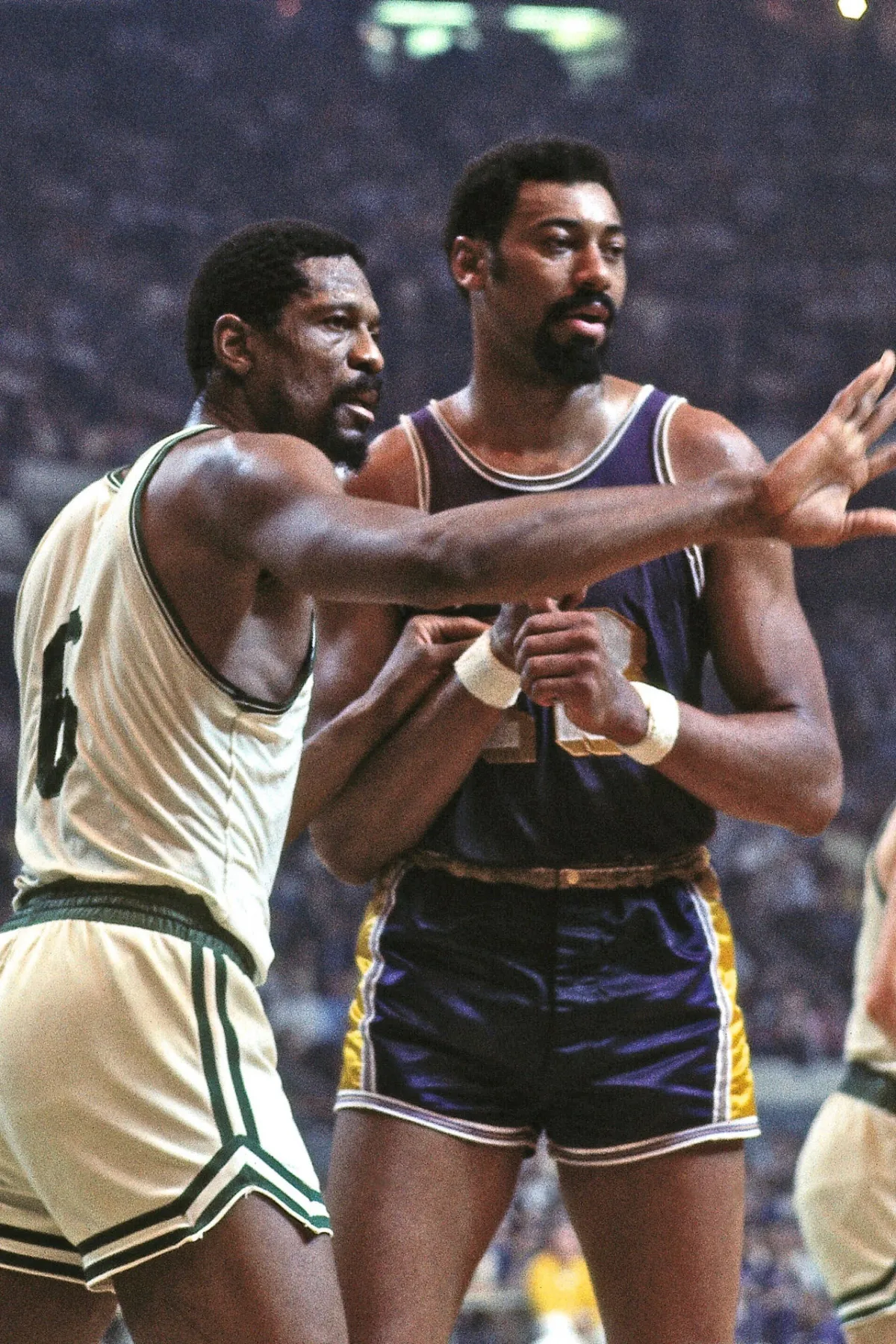 Photo: Wilt Chamberlain, via wallpapers.com
The Technology That Changed Everything
The transformation began gradually in the 1980s and accelerated rapidly in the 2000s. Television networks, hungry for compelling content, invested in better cameras and more sophisticated replay systems. What started as a way to enhance broadcasts became a tool for officials.
Today's NFL games feature cameras embedded in goal line pylons, overhead wire-cam systems that track the ball's exact position, and chips in footballs that can measure their location to within inches. Baseball uses Hawk-Eye technology to track every pitch's speed, spin rate, and precise location relative to the strike zone. Basketball employs replay centers where officials can review calls frame by frame from multiple angles.
The result is unprecedented accuracy, but also unprecedented expectation of perfection. Modern fans assume every call will be correct because the technology exists to make it so. The margin for human error that once defined sports officiating has been systematically eliminated.
What We Lost in the Translation
This evolution solved obvious problems—fewer blown calls, more consistent enforcement, greater fairness. But it also changed the fundamental nature of sports in ways we're still processing.
The human element that once made officiating part of the game's drama has been reduced to technical precision. The colorful personalities like Ron Luciano, who brought individual character to their positions, have been replaced by more uniform, technology-assisted accuracy.
Games now regularly stop for several minutes while officials review plays in slow motion. The spontaneous flow that once defined athletic competition gets interrupted by clinical analysis. We've gained fairness but lost some of the raw, unpredictable energy that made sports compelling.
From Gut Instinct to Digital Certainty
The distance between Rocky Marciano's controversial knockout and today's instant replay reviews represents more than technological progress—it reflects a fundamental shift in how we think about human judgment versus mechanical precision.
In 1952, fans accepted that referees were human and humans made mistakes. Those mistakes were part of the game's texture, sources of endless debate and legendary controversy. Today, we expect officials to get every call right, and we have the technology to help them do it.
Whether that's progress depends on what you value more: the perfect call or the perfectly human moment when someone had to make a split-second decision that would echo through sports history. Either way, we'll never again see a championship decided by one person's best guess—and we'll probably never stop arguing about whether that's a good thing.