
When Athletic Wear Meant Sunday Best
Picture Serena Williams serving at 120 mph while wearing a floor-length dress, corset, and button-up boots. Imagine Roger Federer attempting his famous backhand in a three-piece wool suit with a starched collar. It sounds absurd today, but for the first century of competitive tennis, this was exactly how the world's best players dressed for battle.
The transformation of tennis attire from Victorian formal wear to today's high-tech athletic gear represents one of the most dramatic costume changes in sports history. What players wore on court wasn't just about fashion — it was a reflection of who was allowed to play, how society viewed the human body, and what we thought athletic performance should look like.
The Era of Impossible Elegance
When tennis emerged as a popular sport in the 1870s, the idea of specialized athletic clothing simply didn't exist. Sports were viewed as genteel recreation for the upper classes, not serious physical competition requiring specialized equipment. Players showed up to tennis courts wearing exactly what they'd wear to any other social gathering — formal attire that prioritized propriety over performance.
Men competed in wool trousers, long-sleeved shirts with detachable collars, neckties, and leather dress shoes. The outfit was completed with a jacket that players were expected to keep on throughout the match, regardless of temperature. These weren't lightweight fabrics designed for movement — they were heavy, restrictive materials that absorbed sweat and became increasingly uncomfortable as matches progressed.
Women's tennis attire was even more restrictive. The standard outfit included a full-length dress that reached the ankles, a corset that compressed the torso and limited breathing, long sleeves that covered the arms completely, and a hat that was pinned securely to elaborate hairstyles. The dresses were made of heavy fabrics like wool or cotton, often with multiple layers of petticoats underneath.
The Physics of Playing in Formal Wear
Trying to play competitive tennis in Victorian formal wear was like trying to swim while wearing a winter coat. The clothing created physical limitations that fundamentally changed how the game was played.
Women's corsets made deep breathing nearly impossible, limiting the cardiovascular intensity that matches could reach. The long, heavy skirts made running and quick direction changes extremely difficult, which meant women's tennis evolved as a more stationary, strategic game focused on placement rather than power or speed.
Men's wool suits became increasingly heavy as they absorbed perspiration, and the formal shoes provided no ankle support or traction for the quick lateral movements that tennis demands. The restrictive collars and ties made it difficult to look up for overhead shots, fundamentally limiting the types of shots players could attempt.
The result was a version of tennis that bore little resemblance to the athletic spectacle we know today. Points were shorter, movement was limited, and the physical demands were deliberately minimized to accommodate the clothing requirements.
The Scandal of Showing Skin
The first attempts to introduce practical athletic wear were met with genuine outrage from tennis establishments. When French player Suzanne Lenglen appeared at Wimbledon in 1919 wearing a calf-length dress with short sleeves, it caused an international incident. Sports writers described her outfit as "shocking" and "indecent," despite the fact that she was still more covered up than a typical office worker today.
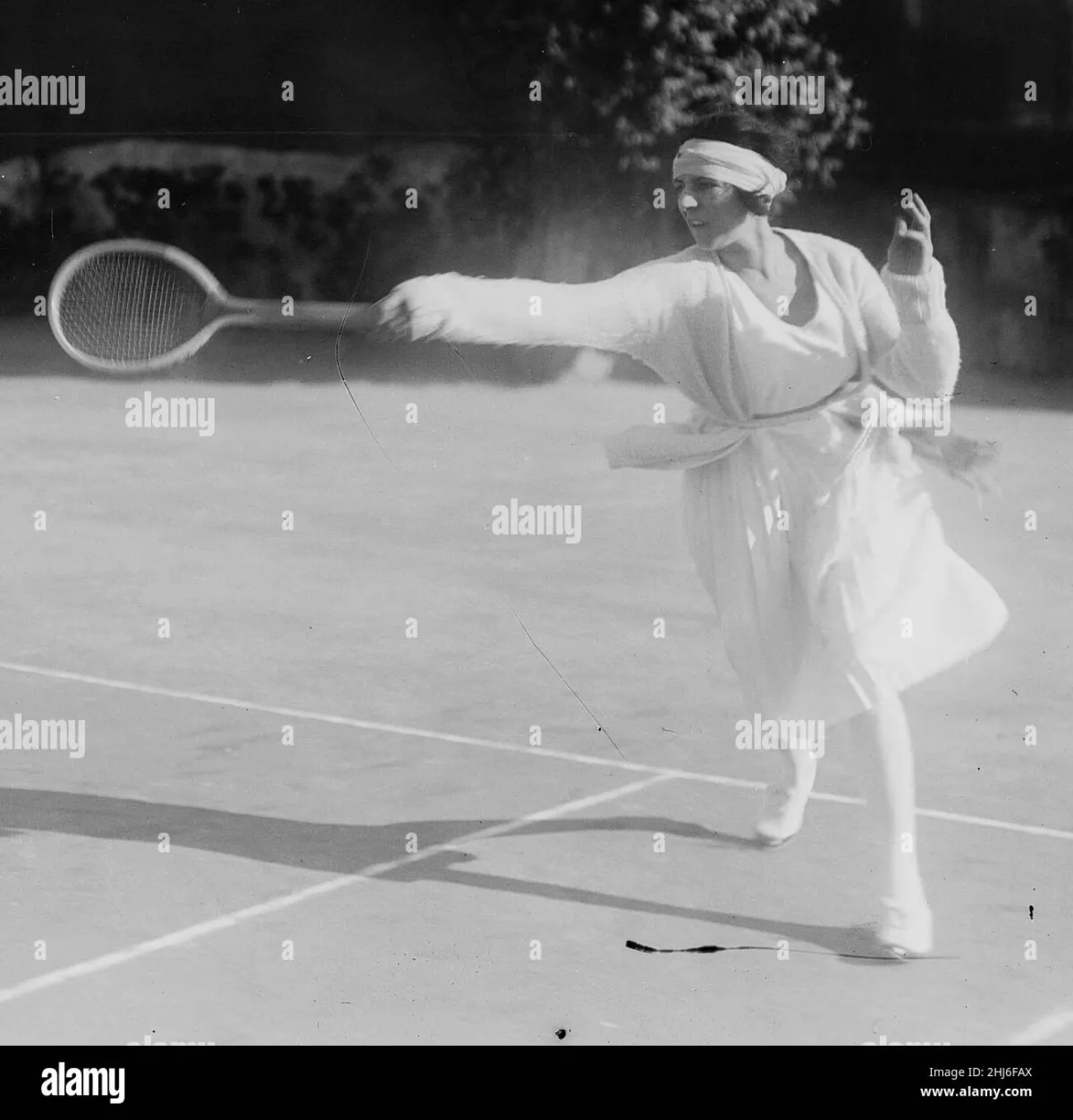 Photo: Suzanne Lenglen, via c8.alamy.com
Men faced similar resistance when they began appearing without jackets or with rolled-up sleeves. Tennis clubs had strict dress codes that were enforced by officials who could disqualify players for improper attire. The All England Club at Wimbledon maintained a rule requiring long trousers for men until 1933, and didn't allow shorts until 1946.
 Photo: All England Club, via www.washingtonpost.com
These weren't arbitrary fashion rules — they reflected deep social beliefs about respectability, class distinction, and the proper relationship between sports and society. Tennis was supposed to be a refined activity for educated gentlemen and ladies, not a sweaty athletic competition that might require specialized clothing.
The Technology Revolution in Fabric
The transformation of tennis attire accelerated dramatically in the mid-20th century as new materials became available. Synthetic fabrics like polyester and nylon allowed for lightweight, breathable clothing that could wick moisture away from the body. Elastic materials made it possible to create fitted clothing that moved with the player's body rather than restricting it.
By the 1970s, tennis players were wearing shorts, sleeveless shirts, and specialized athletic shoes designed specifically for court surfaces. The contrast with earlier eras was so dramatic that watching footage from the 1920s and 1970s looks like comparing two completely different sports.
Today's tennis attire represents the pinnacle of athletic engineering. Modern tennis shirts are made from moisture-wicking synthetic blends that keep players dry and comfortable. Shorts are designed with compression elements that support muscle movement while allowing complete freedom of motion. Shoes are sport-specific with different sole patterns for different court surfaces, ankle support systems, and cushioning technology that absorbs impact.
The Performance Impact of Clothing Evolution
The improvement in athletic performance that resulted from better clothing is difficult to overstate. Modern players can maintain higher intensity levels for longer periods because their clothing helps regulate body temperature and doesn't restrict movement. The ability to move freely has allowed for the development of more dynamic playing styles with longer rallies and more athletic shot-making.
Consider that the longest match in tennis history — John Isner versus Nicolas Mahut at Wimbledon in 2010 — lasted over 11 hours across three days. Such a marathon would have been physically impossible in the formal wear of earlier eras, not because the players lacked stamina, but because the clothing would have made sustained athletic effort unbearable.
When Tradition Meets Performance
Wimbledon still maintains its famous "predominantly white" dress code, but even this traditional requirement has evolved dramatically. Today's "white" tennis attire is made from high-performance synthetic materials that would have been unimaginable to the tournament's founders. Players wear form-fitting compression garments, moisture-wicking fabrics, and specialized athletic shoes — all in the traditional white color that connects them to tennis's formal heritage.
The evolution of tennis attire tells a larger story about how society's relationship with sports, the human body, and physical performance has changed over time. What started as a genteel pastime conducted in formal wear has become a global athletic spectacle where clothing is engineered to help players achieve peak performance.
Looking at photographs of early tennis players in their formal attire, it's remarkable that competitive tennis developed at all. The fact that players managed to create an exciting, skillful sport while wearing clothing designed to restrict their movement is a testament to human adaptability — and makes modern tennis's athletic achievements all the more impressive by comparison.