When Running 26 Miles in Three Hours Was Olympic Glory: How We Accidentally Discovered Humans Could Go Much, Much Faster
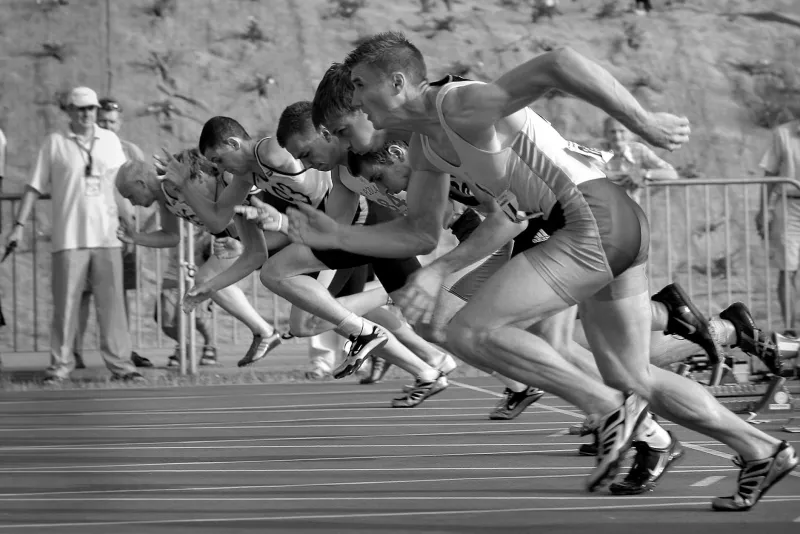
When Running 26 Miles in Three Hours Was Olympic Glory: How We Accidentally Discovered Humans Could Go Much, Much Faster
In 1896, Spyridon Louis crossed the finish line at the first modern Olympic marathon in Athens, Greece. His winning time? Two hours, 58 minutes, and 50 seconds. The crowd went wild. Newspapers called it superhuman. Greece had found its hero.
Today, that "superhuman" performance wouldn't even qualify Louis for the Boston Marathon. In fact, it's roughly the pace of a decent weekend warrior having a pretty good day.
When Good Enough Was Actually Good Enough
Louis wasn't slow by the standards of his time — he was extraordinary. But those standards were built on guesswork, folklore, and whatever training methods seemed reasonable to men who had never heard of VO2 max or lactate threshold.
The early marathon runners were essentially conducting a massive human experiment with a sample size of one: themselves. They trained by running long distances at whatever pace felt sustainable, fueled by whatever seemed like a good idea (often wine or brandy during the race), and wore whatever shoes were available at the local cobbler.
Louis himself was a mailman who trained by running his postal route through the Greek countryside. His pre-race meal included lamb, eggs, and wine. His shoes were handmade leather boots that probably weighed three times what modern racing flats weigh.
The Accidental Science Experiment
What happened over the next 125 years wasn't just improvement — it was discovery. We didn't just get better at running marathons; we learned what the human body was actually capable of when you stopped guessing and started measuring.
The first breakthrough came with understanding pace and energy systems. Early runners had no concept of negative splits or even basic pacing strategies. They ran by feel in a world where "feel" was the only data available. No GPS watches, no heart rate monitors, no split times called out every mile.
By the 1960s, runners like Abebe Bikila (who famously won Olympic gold barefoot) started bringing more systematic training approaches. Bikila's winning time in 1960: 2:15:16 — nearly 44 minutes faster than Louis's "superhuman" performance just 64 years earlier.
When Everything Changed at Once
The real revolution came in the 1970s and 80s, when several discoveries converged like ingredients in a perfect storm of human performance.
First, exercise physiology became a real science. Researchers figured out how the body actually produces energy during long-distance running, leading to training methods that targeted specific energy systems. The old "run until you're tired, then run some more" approach gave way to interval training, tempo runs, and periodization.
Second, nutrition science caught up with athletic performance. Runners learned about carbohydrate loading, proper hydration strategies, and in-race fueling. The wine and brandy stations of early marathons were replaced with precisely formulated sports drinks and energy gels.
Third, shoe technology made the leap from cobbler craft to aerospace engineering. Modern racing shoes don't just protect feet — they return energy with every stride. The carbon-plated "super shoes" of today can improve marathon times by 2-4%, which at elite levels means the difference between winning and finishing tenth.
The Two-Hour Barrier That Wasn't
For decades, the two-hour marathon seemed like a biological impossibility. Sports scientists calculated the theoretical limits of human oxygen consumption, energy efficiency, and biomechanics. The math suggested humans might get close, but breaking two hours seemed to violate the laws of physics.
Then Eliud Kipchoge ran 1:59:40 in a specially designed attempt in 2019.
The record didn't count for official purposes — too many variables were optimized, from the pacing team to the course to the conditions. But it proved that what we thought was a hard ceiling was just another knowledge gap.
Kipchoge's official world record, set in Berlin in 2022, stands at 2:01:09. That's nearly an hour faster than Spyridon Louis's heroic performance in 1896.
What We Thought We Knew
The most striking thing about this evolution isn't just the time improvement — it's how wrong we were about human limits at every step.
In 1954, when Roger Bannister broke the four-minute mile, experts had spent years debating whether it was physiologically possible. Within months, multiple runners had done it. The barrier wasn't physical; it was psychological and methodological.
The same pattern repeated with the marathon. Each "impossible" barrier — 2:30, 2:20, 2:10, 2:05 — fell not because humans evolved, but because we got better at understanding what humans were already capable of.
The Next Impossible Thing
Today's marathon world record of 2:01:09 seems almost untouchable. Sports scientists point to theoretical limits of human performance and suggest we're approaching the absolute ceiling of what's possible.
But we've heard that before. Every generation of experts has been confident they understood the limits, only to watch the next generation blow past them.
So here's the question that keeps exercise physiologists awake at night: What record that seems unbreakable today will look ordinary in another hundred years? What ceiling that appears absolute is actually just another knowledge gap waiting to be filled?
If history is any guide, our great-grandchildren will look back at today's "impossible" times the same way we look at Spyridon Louis's heroic 2:58:50 — as a charming reminder of how little we once understood about what humans could really do.