Cinders, Canvas, and Pure Guts: How Sprinting Got Faster Without Humans Actually Changing

Picture the fastest man alive. He's crouched at the starting line, fingertips pressed into a surface that feels like a gravel driveway, wearing shoes that look like something your grandfather might have worn to church. There are no electronic timing gates. No starting blocks. No wind sensors. Just a guy, a cinder track, and a starter's pistol.
That was Olympic sprinting for most of the 20th century. And somehow, those men were considered the pinnacle of human speed.
It's worth pausing on that for a second — because when you compare what those athletes were working with to what today's sprinters have at their disposal, the contrast isn't just dramatic. It's almost unbelievable.
The Track Beneath Their Feet
For decades, the standard surface for competitive sprinting was a cinder track — a mixture of crushed coal ash, slag, and clay packed into a running surface. It was cheap, widely available, and deeply inconsistent. Rain could turn it soft and slow. Dry heat could make it crumble and uneven. A sprinter lining up for the 100 meters in the morning might be running on a completely different surface than the guy who ran the same race the afternoon before.
The energy return from cinder was essentially zero. Every footstrike absorbed force and gave almost none of it back. Modern synthetic tracks — the rubberized, polyurethane surfaces you see at major stadiums today — are specifically engineered to return energy to the runner. Studies have shown that modern track surfaces can improve sprint times by as much as two to three percent compared to cinder. Over 100 meters, that's not a rounding error. That's a completely different race.
And yet, for the longest time, nobody questioned it. Cinder was just what tracks were made of. You trained on it, you raced on it, and if you wanted to go faster, you ran harder.
Shoes That Weighed More Than the Science Behind Them
The footwear situation was, to put it gently, not great. Early sprint shoes were leather uppers with rudimentary metal spikes pressed into a leather sole. They were heavy, stiff, and offered almost no lateral support. The spikes themselves were blunt compared to modern standards, which meant less grip and more energy lost with every stride.
Today's sprint spikes are a different species entirely. Carbon fiber plates embedded in the midsole act like a spring, propelling the foot forward with each push-off. The uppers are made from mesh so light it barely registers on a scale. The spike pattern is designed using computational fluid dynamics to minimize drag. Some of the leading manufacturers spend years and millions of dollars engineering a shoe that will be worn for maybe ten seconds of competitive racing.
When Usain Bolt set the 100-meter world record of 9.58 seconds in 2009, he was wearing a shoe that had been built around his specific biomechanics. The sprinters of the 1930s were wearing something closer to a boot.
 Photo: Usain Bolt, via builtforathletes.com
No Blocks, No Data, No Idea
Starting blocks weren't even standard equipment at the Olympic level until the 1948 London Games. Before that, athletes dug small holes in the cinder with a trowel — literally digging their own starting position into the track — or simply stood in a crouch and hoped for the best. The mechanical advantage that a rigid starting block provides, the ability to drive explosively off a fixed surface at a precise angle, just didn't exist.
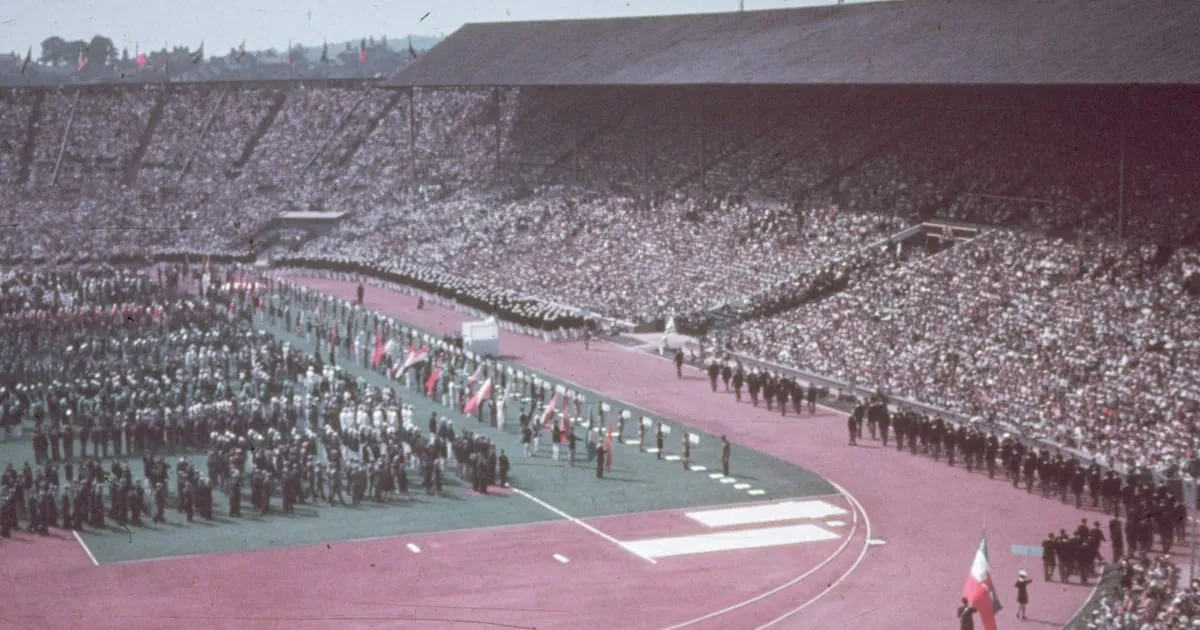 Photo: 1948 London Games, via img.olympicchannel.com
Beyond the equipment gap, there was an almost total absence of performance data. Coaches worked from intuition and observation. There was no video analysis, no force plate data, no GPS tracking of stride length and cadence. A sprinter's training was based on what felt right and what had worked for someone else before. Interval training, weight programs, and periodization were primitive concepts at best.
Modern sprint coaches operate in a completely different universe. High-speed cameras capture thousands of frames per second to analyze foot placement and arm mechanics. Force plates measure ground contact time down to the millisecond. Athletes are fitted with sensors that track their acceleration curve in real time. A coach in 2025 knows more about what happens during a single 100-meter race than an entire generation of coaches before the 1980s knew in a lifetime.
Wind, Timing, and the Legitimacy Question
There's another factor that rarely gets discussed when people compare old records to new ones: timing accuracy. Early sprint times were recorded by hand-held stopwatches operated by human officials. The reaction time of the person holding the watch introduced a margin of error that could easily exceed a tenth of a second — which, in a race decided by hundredths, is enormous.
Fully automatic timing, triggered by the starter's gun and stopped by a laser beam at the finish line, didn't become standard at the Olympics until 1968. Before that, the record books were essentially aspirational. A time of 10.3 seconds in 1936 might have been 10.4 or 10.2 depending on which official's thumb was fastest.
Modern world records also require wind readings below a legal limit of 2.0 meters per second. Early sprinters ran without any wind measurement at all. A tailwind that would have invalidated a modern performance simply wasn't tracked.
So Who Was Actually Faster?
Here's the uncomfortable truth at the center of all this: we genuinely don't know how fast the great sprinters of the early 20th century could have run under modern conditions. Jesse Owens, who stunned the world at the 1936 Berlin Olympics, was running on cinder, wearing leather shoes, with hand-held timing and no starting blocks that would meet today's standards. Put him in modern spikes on a synthetic track with electronic timing and a legal wind reading, and what happens?
 Photo: Jesse Owens, via c8.alamy.com
Some sports scientists have tried to estimate the answer. The consensus is that modern conditions alone — track surface, footwear, timing systems — could account for somewhere between 0.3 and 0.5 seconds over 100 meters. That's not a small number. That's the difference between a world record and a decent club performance today.
None of this diminishes what those early sprinters achieved. Running as fast as any human being alive, on a gravel track, in leather shoes, with no science behind them — that required something extraordinary. But it does reframe the story of how human speed has evolved.
We didn't just get faster. We got smarter about the conditions we run in. And that, it turns out, made all the difference.