Legal Pads and Box Scores: How a Nerd Experiment in a Manhattan Hotel Became a $10 Billion Obsession

Picture this: it's a Tuesday evening in April 1982. You've just watched your favorite player go three-for-four with a home run and two RBIs. It was a great game. But before you can know whether that performance helped or hurt you in your league, you need to wait until Thursday's newspaper arrives, find the box score buried on page C-7, and then spend 45 minutes with a calculator and a handwritten spreadsheet on your kitchen table.
Welcome to fantasy baseball in the early days — a pastime that required genuine commitment, a tolerance for arithmetic, and the patience of someone who had absolutely nothing else going on.
Now compare that to today, where 60 million Americans play fantasy sports on platforms that update statistics in real time, generate automated trade recommendations, and send push notifications to your phone the moment your running back pulls a hamstring in warmups.
The distance between those two worlds is one of the more quietly staggering transformations in American sports culture.
The Room Where It Started
The origin story of fantasy sports has the quality of a founding myth — small, improbable, and impossible to fully verify. But the most widely accepted version goes like this.
In 1980, a group of baseball writers and enthusiasts, led by writer Daniel Okrent, gathered at a restaurant called La Rotisserie Française in Manhattan. They were developing a game they called Rotisserie Baseball — named after the restaurant — in which participants drafted real Major League Baseball players and competed based on those players' actual statistical output across the season.
 Photo: La Rotisserie Française, via www.rotisseriedelabastide.ovh
 Photo: Daniel Okrent, via www.theglobeandmail.com
The rules were detailed. The math was manual. The results took days to compile. And the whole enterprise was conducted via phone calls, handwritten notes, and the sports pages of the New York Times.
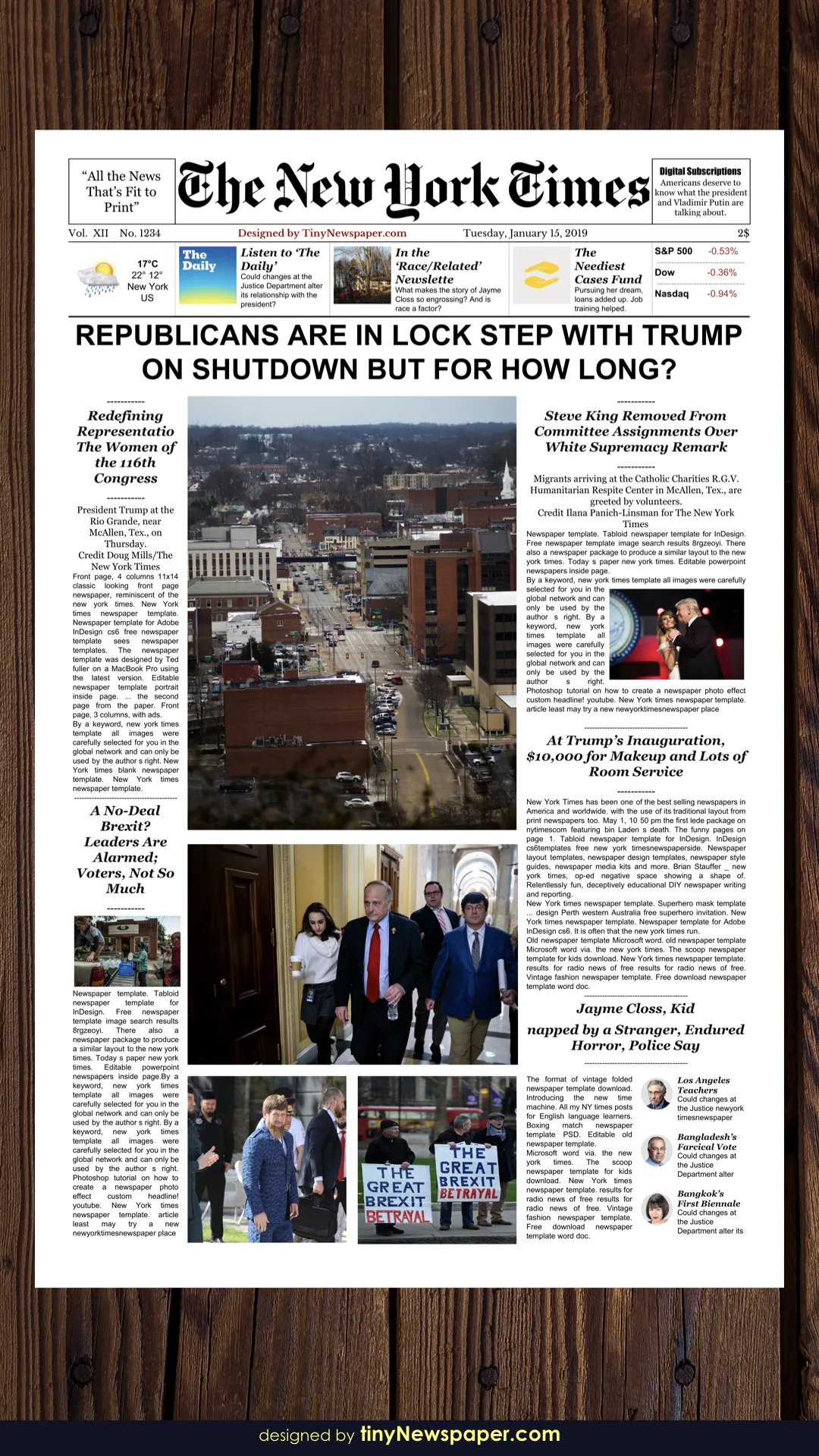 Photo: New York Times, via i.pinimg.com
It was, by modern standards, almost comically labor-intensive. And the people playing it loved every second.
The Long Slow Spread
For most of the 1980s, fantasy sports existed in a kind of underground network — passed between friends, adapted into football and basketball leagues, run out of offices and living rooms by people who were willing to do the math themselves.
The newspaper was everything. Sunday editions were sacred. Box scores were studied with the intensity of financial reports. If your newspaper didn't arrive, or if a game wasn't covered in enough detail, you were simply out of luck until the next edition.
League commissioners — usually whoever had started the league and was most obsessive about it — spent hours each week compiling statistics by hand. Disputes were common. Errors were constant. The whole system ran on trust, goodwill, and an alarming amount of free time.
There was no app. There was no website. There was barely a consensus on how to calculate certain statistics. Every league made its own rules, kept its own records, and operated in cheerful, chaotic independence from every other league in the country.
The Internet Changes the Math
The arrival of the internet didn't just make fantasy sports easier. It made them possible at scale in a way that simply hadn't existed before.
By the mid-1990s, websites began offering automated stat tracking. By the early 2000s, ESPN, Yahoo, and CBS had built full fantasy platforms that handled drafts, scoring, and standings automatically. The legal pad was retired. The Sunday newspaper became optional.
Participation exploded. What had been a hobby for a few hundred thousand dedicated enthusiasts became a mainstream American pastime. By 2005, an estimated 15 million people were playing fantasy sports. By 2015, that number had more than tripled.
The psychological hook was powerful and somewhat underappreciated at the time. Fantasy sports didn't just give fans a reason to watch their team — they gave fans a reason to watch every team. A wide receiver playing for a franchise you'd never cared about suddenly mattered because he was on your roster. A relief pitcher in a city you'd never visited could determine whether you won or lost your week.
The NFL's ratings boom of the 2000s and 2010s owes a significant, if rarely acknowledged, debt to fantasy football.
Daily Fantasy and the Money Explosion
The next seismic shift came around 2012, when daily fantasy sports platforms — most notably DraftKings and FanDuel — introduced a format where contests lasted a single day rather than an entire season.
The implications were enormous. You no longer needed to commit to a full season. You could play on a Tuesday, win or lose by Wednesday morning, and start fresh the next day. The financial stakes rose accordingly. These weren't office pools with a modest prize at the end — they were real-money contests with payouts that sometimes reached into six figures.
Both companies grew at extraordinary speed. By 2015, DraftKings and FanDuel were spending a combined $200 million on advertising in a single NFL season — more than any other industry category on television that fall. You could not watch a football game without seeing their commercials.
The industry's total value today is estimated at over $10 billion, with projections that suggest it will continue growing as sports betting legalization spreads across more states.
What the Numbers Actually Mean
Sixty million American players. Billions of dollars in entry fees. Entire media ecosystems — podcasts, YouTube channels, subscription newsletters — built entirely around helping people win fantasy leagues.
The relationship between fans and the sport has been permanently altered. Viewers who might have checked out of a blowout game now stay tuned because their fantasy quarterback is still on the field. Fans who grew up rooting for one team now follow players across the entire league with an investment that feels almost personal.
Daniel Okrent, sitting in that Manhattan restaurant in 1980 with a legal pad and a set of house rules, could not have imagined any of it.
He was just trying to make baseball more interesting on a Tuesday afternoon.
Somehow, that was enough to change everything.