One Doctor, Your Whole Life: The Slow Death of Medicine's Most Personal Relationship
Picture this: it's 1952, somewhere in rural Ohio. You wake up with a fever and a chest that feels like it's wrapped in wet concrete. Your mother doesn't search symptoms on a phone or navigate an insurance portal. She picks up the telephone — the one on the kitchen wall — and calls Dr. Hendricks. By mid-afternoon, Dr. Hendricks is sitting at your kitchen table with a black leather bag, pressing a stethoscope to your chest, and asking your mother how your grandmother's arthritis has been lately.
He already knows the answer. He treated your grandmother too.
That world is almost entirely gone now. And most Americans under forty have no real memory of it ever existing.
The Doctor Who Knew Everything About You
For the better part of American history, the family physician wasn't just a medical professional — they were a community institution. In small towns and urban neighborhoods alike, doctors often spent decades serving the same families across multiple generations. They knew who drank too much, who was under financial stress, who had a family history of heart trouble, and who needed a gentle push to take better care of themselves.
This wasn't just warm and fuzzy nostalgia. It was genuinely useful medicine. A doctor who had treated your father's hypertension for twenty years brought context to your own elevated blood pressure reading that no electronic health record can fully replicate. They understood patterns that a fifteen-minute intake form simply cannot capture.
House calls were a real, functioning part of this system. As late as the 1960s, roughly 40 percent of all doctor-patient interactions in the United States happened in the patient's home. The physician came to you. They saw how you lived, what you ate, whether your house was drafty in winter. That environmental context shaped their diagnosis in ways that a sterile exam room never could.
Where Did It All Go?
The shift didn't happen overnight, and it wasn't driven by any single villain. It was a slow collision of forces — most of them well-intentioned — that gradually pulled medicine away from its personal roots.
The post-World War II era brought an explosion in medical specialization. New treatments, new technologies, and new understanding of disease complexity meant that one generalist doctor simply couldn't master everything anymore. Patients with serious conditions were increasingly referred to cardiologists, neurologists, oncologists, and a growing roster of subspecialists. That was genuinely good for outcomes in many cases. But it also meant that the person who knew your whole story was no longer the person treating your most serious problems.
Then came the economics. As healthcare costs climbed through the 1970s and 1980s, insurance companies and hospital systems began optimizing for efficiency. The house call — time-consuming, logistically complicated, hard to bill properly — quietly disappeared. By 1980, it accounted for less than one percent of physician visits. The family doctor, once an independent professional embedded in a community, increasingly became an employee of a larger system with productivity targets and appointment quotas.
Today, the average primary care appointment in the United States lasts between fifteen and eighteen minutes. Some studies put it closer to eleven. Physicians are managing patient loads that would have been unthinkable to Dr. Hendricks sitting at that Ohio kitchen table.
What We Gained — And What the Spreadsheet Doesn't Show
It would be dishonest to frame this purely as loss. The modern medical system has delivered genuinely extraordinary things. Conditions that were death sentences in 1952 are now managed with a daily pill. Surgical techniques that seemed like science fiction fifty years ago are now routine. Diagnostic imaging can detect tumors before they're the size of a marble. The average American lives significantly longer than their grandparents did, and medicine deserves real credit for that.
Specialization, for all its fragmentation, means that the person treating your heart condition has spent their entire career thinking about nothing else. That depth of focus matters when things get complicated.
But something real was traded away in the process. Continuity of care — the ongoing relationship between a single physician and a patient over years or decades — is one of the most well-documented predictors of better health outcomes. Patients with consistent primary care providers are more likely to catch problems early, more likely to follow treatment plans, and less likely to end up in emergency rooms for preventable issues.
The fragmented specialist system, for all its technical brilliance, sometimes struggles to see the whole person. Five different specialists treating five different conditions don't always communicate with each other. The patient becomes a collection of problems rather than a human being with a history.
The Relationship That Used to Be the Treatment
There's a softer loss here too, one that's harder to quantify in a clinical study. The old family doctor relationship was, in itself, a form of care. Patients who trusted their physician implicitly — who had known them for decades — were more honest about symptoms, more forthcoming about lifestyle habits, more likely to ask the embarrassing question they'd been putting off.
That trust takes time to build. It doesn't happen in fifteen-minute increments with a provider you've seen twice.
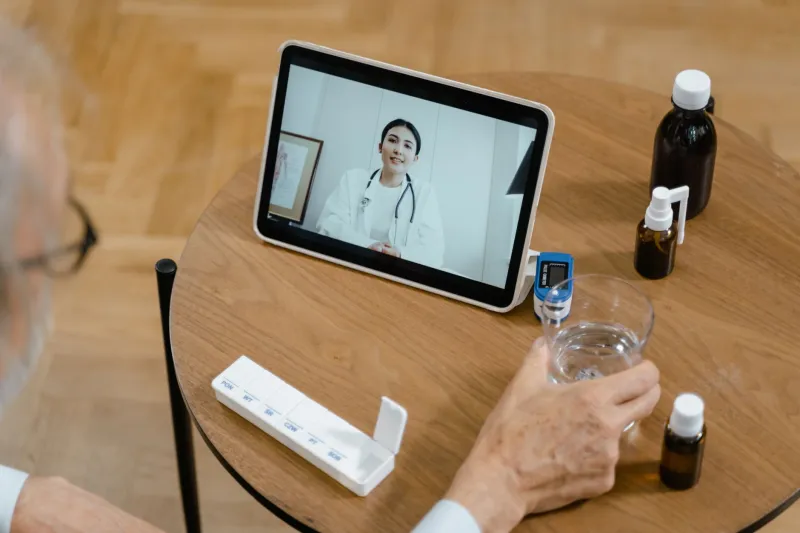
Some corners of American medicine are trying to reclaim pieces of this. Concierge medicine, where patients pay a flat monthly fee for extended access to a single physician, has grown steadily among those who can afford it. Direct primary care practices are experimenting with smaller patient panels and longer appointments. Telehealth, ironically, has brought back a version of the house call — the doctor appearing in your living room via a screen, at least.
But these are options for the financially comfortable. For most Americans, the fifteen-minute appointment with a rotating roster of providers remains the reality.
Then Before This
The world before modern medicine was genuinely more dangerous. Infections that are now trivially treated used to kill people. Childbirth was a serious risk. A bad appendix was a death sentence. Nobody should romanticize that.
But the intimacy that existed between doctors and patients — the relationship that spanned decades and generations, the physician who knew your family like a neighbor — that was something real and valuable. The fact that it was quietly engineered out of the system in pursuit of efficiency and scale is worth pausing on.
Medicine got bigger, smarter, and faster. It also got lonelier. And whether we're better off for that trade is a question American healthcare is still figuring out how to answer.