You Used to Need a Guy to Watch the Game: The Wild History of Getting Sports on Your Screen
The Guy With the Satellite Dish
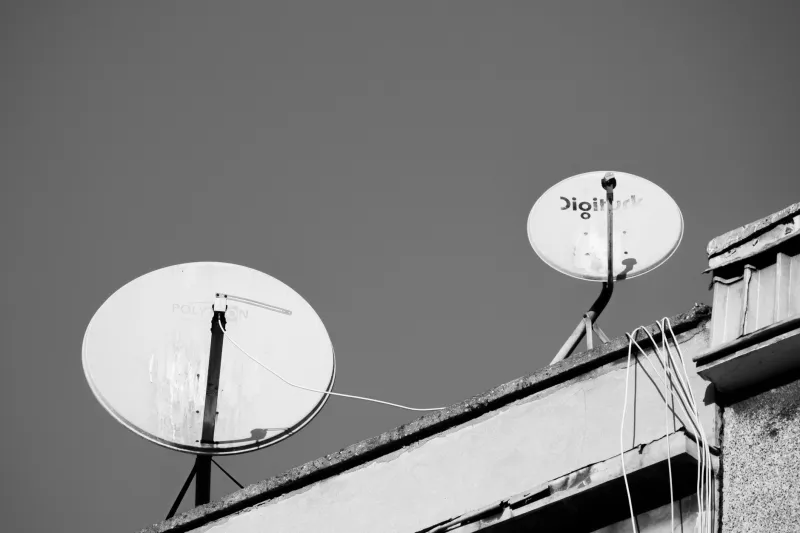
Somewhere in suburban Ohio in 1987, there was a man who had The Dish. Not a small one. A massive, eight-foot wide satellite receiver that dominated his backyard like a small spacecraft had crash-landed between the garden and the fence. His neighbors thought he was eccentric. His friends thought he was a genius. On Sunday afternoons during football season, his living room was standing room only.
That's how it worked. If you wanted to watch sports beyond what your local affiliate decided you deserved to see, you needed connections, equipment, or a willingness to break a few rules. The idea that you could pull out a phone, tap twice, and watch any game from any city in the country — that would have sounded like science fiction to most fans in 1985.
And yet here we are.
Static, Tape, and Determination
For fans in the 1980s and early 90s, watching sports required a kind of resourcefulness that today's audiences simply don't need. Out-of-market games were essentially invisible unless your team happened to be nationally relevant enough to earn a broadcast slot. Monday Night Football gave you one game. The Saturday baseball game of the week gave you one matchup. Everything else was local, and local meant whatever market you happened to live in.
Die-hard fans developed workarounds. Blank VHS tapes were treated like precious commodities. Fan networks — actual human networks, not social ones — formed around the country where people would physically mail recorded tapes to each other. You'd send a tape of your team's Sunday game to someone in another state, and they'd send one back. It was slow, it was grainy, and it was absolutely illegal under copyright law. Nobody particularly cared.
Cable television changed the landscape somewhat. ESPN launched in 1979 and spent its early years broadcasting Australian rules football and slow-pitch softball because that's what it could afford. By the mid-80s it had grown into something real, but even then, regional sports networks created a patchwork system where your geography determined your access as much as anything else.
Pay-per-view arrived and felt like a revolution. Boxing events, WrestleMania, the occasional NFL playoff game — you could order specific events for a fee. It was clunky and expensive, but it was legitimate. For the first time, money could substitute for geography.
The Dish Gets Smaller
DirecTV's NFL Sunday Ticket launched in 1994 and genuinely changed everything for football fans. For the first time, a legal product existed that let you watch out-of-market games from your couch without mailing tapes or knowing a guy with a barn-sized satellite receiver. The catch was the price — not cheap — and the requirement to subscribe to satellite television service. But for serious fans, it was worth every penny.
Baseball followed with its own out-of-market packages. Hockey did the same. The model was consistent: pay a premium, get access. It wasn't elegant, but it worked. Fans grumbled about the cost, but at least the picture was clear and nobody was getting cease-and-desist letters.
Then the internet arrived and blew the whole thing sideways.
The Streaming Paradox
Here's the strange part of this story. We now live in an era where more sports content is legally available than at any point in human history. League-specific streaming apps, network streaming platforms, cable authenticated services, standalone subscriptions — the options are genuinely staggering. And yet a significant number of casual fans find themselves more confused about how to watch a specific game than their parents were in 1991.
Want to watch Thursday Night Football? That's Amazon Prime. Sunday afternoon games? Your local CBS or Fox affiliate, or Paramount Plus, or the NFL app if you're out of market. Sunday night? NBC and Peacock. Monday night? ESPN, which requires a cable subscription or a Disney bundle. The Super Bowl might be on one network this year and a different one next year.
Baseball is arguably worse. Regional sports networks have been collapsing across the country, leaving fans in some markets unable to watch their own local team on any legal platform. The league has been scrambling to fill gaps with its own streaming product, but blackout rules — a relic of broadcast agreements designed to protect local TV deals — still prevent fans from watching games played in their own city unless they have a specific cable package.
The irony is thick enough to chew on. The fan in 1987 who couldn't watch his team because the game wasn't broadcast locally had a simple problem with a complicated solution. The fan in 2024 who can't figure out which of seventeen platforms carries tonight's game has a complicated problem with a simple cause: too many rights holders, too many deals, and not enough coordination.
What Got Lost in the Upgrade
There's something else worth noting. When access was scarce, the games that broke through carried enormous cultural weight. The broadcast game of the week wasn't just a game — it was an event. People planned around it. Neighborhoods emptied. Bars filled up.
Today, the sheer volume of available content has diluted that feeling somewhat. You can watch almost anything, almost anytime, which means no single game carries the gravity it once did. That's mostly a good thing — access is genuinely better for fans who know how to navigate the system. But something small and hard to name went away when scarcity did.
The man with the giant satellite dish in his backyard became a legend in his neighborhood precisely because what he had was rare. Today, everyone has access to essentially the same thing, and nobody becomes a legend for it.
Progress is funny that way.