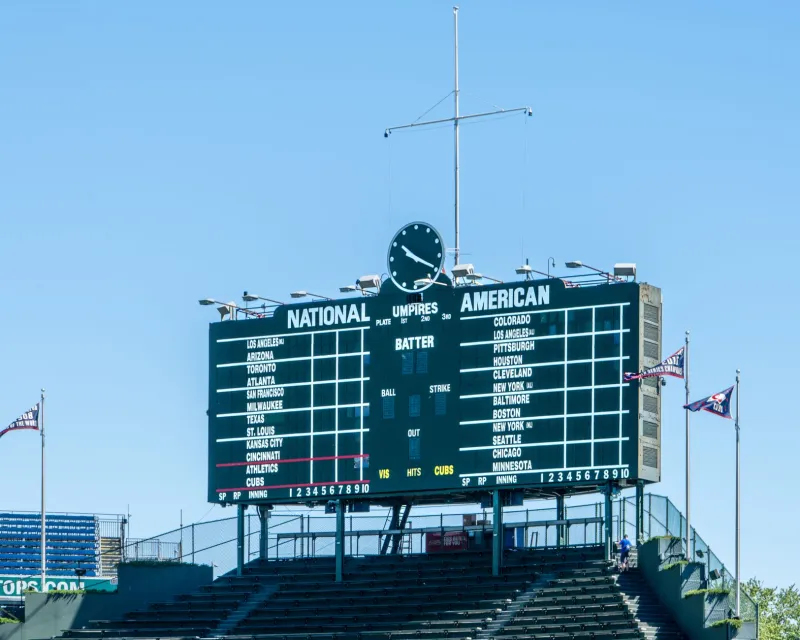
The Town Crier With a Telegraph Key: How America Tracked Baseball Before WiFi Existed
When Knowing the Score Was an Adventure
Imagine your favorite team is playing the biggest game of the season 1,200 miles away, and you have absolutely no way to know what's happening until tomorrow morning's newspaper arrives. No radio broadcasts. No television. No internet. No smartphones buzzing with score updates every few minutes.
This was reality for baseball fans in 1890s America, when following your team's fortunes required patience, imagination, and sometimes a willingness to abandon your daily routine to hunt down information that today arrives automatically in your pocket.
The Telegraph: America's First Sports Network
The only real-time connection between distant baseball games and eager fans was the telegraph system, a network of wires and operators that could transmit basic information across the country in minutes rather than days. But this revolutionary technology came with significant limitations that shaped how Americans experienced baseball for decades.
Telegraph operators working games would tap out abbreviated score updates between innings: "Chi 4 Bos 2 6th" meant Chicago led Boston 4-2 after six innings. These cryptic messages would arrive at telegraph offices in cities hundreds of miles away, where operators would post them on boards outside their offices or in nearby barbershops, saloons, and general stores.
Fans developed elaborate rituals around these score updates. In small towns across America, groups of men would gather outside the local telegraph office during important games, waiting for the operator to emerge with the latest information chalked on a small blackboard. The arrival of each update would trigger immediate discussion, analysis, and speculation about what might happen next.
The Barbershop Bulletin Board
Barbershops became unofficial sports information centers in the pre-radio era. Shop owners would pay telegraph operators to deliver regular score updates, which they'd post on windows or boards visible from the street. During important games, crowds would gather outside these shops, reading each update aloud to newcomers and debating the implications of every run scored.
These gatherings turned following distant baseball games into community events. Fathers would bring their sons to witness important moments in baseball history, even though "witnessing" meant reading telegraphed updates posted on barbershop windows. The shared experience of waiting for information created bonds between fans that modern instant access can't replicate.
Some enterprising barbershop owners would hire young men to run between their shops and the telegraph office, creating primitive but effective sports news networks that served entire neighborhoods. These runners would sprint through streets carrying score updates, turning game information into a relay race that added its own drama to the baseball experience.
When Trains Carried More Than Passengers
Passenger trains served as another crucial link in the pre-electronic sports information network. Conductors and passengers traveling from cities where games were played would carry score information to towns along their routes, sharing results with station masters who would post them for local fans.
Train schedules became sports schedules for fans in smaller communities. If the 4:15 train from Chicago was running on time, that meant World Series updates would arrive by 4:30. If weather delayed the train, fans might wait hours longer for information about games that had actually ended hours earlier.
 Photo: World Series, via o.quizlet.com
Some dedicated fans would meet every train arriving from cities where their teams were playing, hoping to find passengers who had attended games or at least picked up newspapers with final scores. This turned train stations into impromptu sports information exchanges where travelers became unwitting sports reporters for entire communities.
The Morning After Revelation
For most baseball fans in the 1890s and early 1900s, the primary source of game information remained the morning newspaper, which meant living with uncertainty for hours after games ended. Fans would go to bed not knowing whether their team had won or lost, then rush to their front porches each morning to discover what had happened the day before.
Newspapers understood their role as the definitive source of sports information and treated it seriously. Sports sections included not just final scores and basic statistics, but detailed play-by-play accounts that helped readers visualize games they couldn't see or hear. Baseball writing became an art form because writers knew they were their readers' only connection to distant games.
The delay between games and reports also created a different relationship between fans and their teams. Instead of experiencing the emotional highs and lows of each inning in real time, fans would absorb entire games at once, learning about dramatic ninth-inning comebacks or heartbreaking defeats all at the same moment. This compressed emotional experience was intense but fundamentally different from today's pitch-by-pitch anxiety.
The Radio Revolution Changes Everything
The introduction of radio broadcasts in the 1920s completely transformed how Americans followed baseball. Suddenly, fans could experience distant games in real time, hearing the crack of the bat and the roar of the crowd. The community gatherings around telegraph offices and barbershop windows gradually disappeared as families gathered around radio sets in their living rooms.
But even radio had limitations that seem almost quaint today. Many teams didn't broadcast road games, leaving fans to rely on telegraph updates or newspaper reports when their teams traveled. Some radio stations would "recreate" road games in their studios, with announcers reading telegraph updates and adding sound effects to simulate the ballpark experience.
What We Lost When We Gained Everything
Today's baseball fans receive more information about games in progress than the players themselves had access to a century ago. Smartphone apps provide real-time statistics, video highlights, and expert analysis for every pitch of every game. The transformation from telegraph updates to instant access represents obvious progress in terms of convenience and completeness.
But something was lost when following distant baseball games stopped requiring effort and community cooperation. Those barbershop gatherings and train station vigils created shared experiences that bonded fans to each other and to their teams in ways that individual smartphone consumption cannot replicate.
The anticipation that came with waiting for score updates also intensified the emotional impact of game results. When learning your team's fate required patience and sometimes detective work, victories felt more earned and defeats cut deeper. Modern instant access provides more information but perhaps less emotional investment in the process of discovery.
The telegraph era of baseball fandom required imagination, patience, and community participation. Today's digital age offers convenience, completeness, and individual control. Both approaches have their merits, but only one turned finding out the score into an adventure worth remembering.