When Judges Called Winners and Losers Shrugged
The Man with the Best Seat in the House
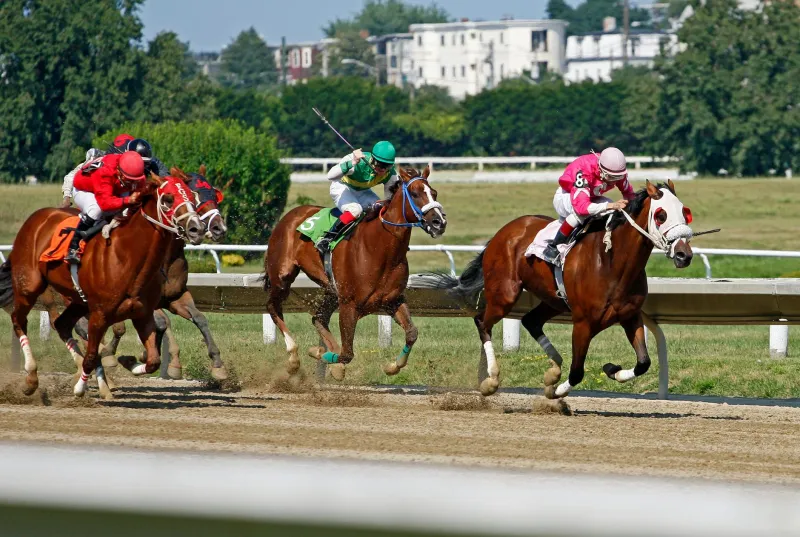
Harry Henshel stood at the finish line of Churchill Downs on May 5, 1962, watching two horses thunder toward him in perfect synchronization. War Admiral and Seabiscuit—no, wait, this was Decidedly and Ridan in the Kentucky Derby, but from where Henshel stood, they looked like a single four-legged blur moving at 40 miles per hour. In approximately two seconds, he would have to decide which horse crossed the finish line first, determining the winner of America's most famous horse race.
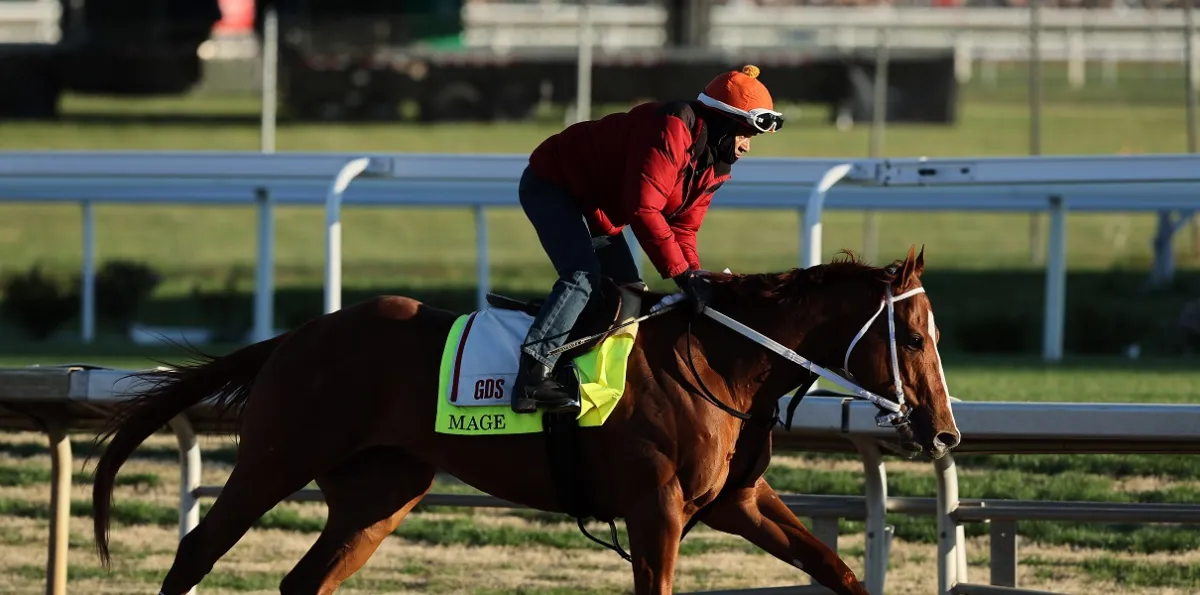 Photo: Kentucky Derby, via www.bleachernation.com
 Photo: Churchill Downs, via www.kentuckyderby.com
Henshel was the official finish line judge, and his eyes were the only technology available to make the call.
He picked Decidedly. The margin of victory was listed as "a nose." Nobody could argue with him because nobody had a better view.
This was how we decided winners for most of competitive sports history.
The Art of the Eyeball Finish
Before photo finish cameras, electronic timing, and digital sensors, determining the winner of close races came down to the judgment of officials positioned at finish lines with nothing but their vision and their reputation on the line. These judges developed an almost mystical authority—their word was final because there was literally no way to double-check their decisions.
The setup was surprisingly formal. In horse racing, three judges typically sat in an elevated booth directly above the finish line, each responsible for watching specific lanes or positions. In track and field, the head judge stood at the finish line with assistants positioned at various angles to catch different perspectives. In cycling, judges rode in cars or stood on platforms, trying to follow riders through sometimes chaotic sprints to the line.
But no matter how many officials watched or how carefully they positioned themselves, they were still humans trying to track objects moving at incredible speeds. And humans make mistakes.
Famous Controversies That Changed Everything
The 1948 Olympic 100-meter dash in London created the controversy that would eventually revolutionize how we determine winners. Harrison Dillard of the United States and Alastair McCorquodale of Great Britain appeared to cross the finish line simultaneously. The judges huddled, debated, and eventually awarded the gold medal to Dillard.
McCorquodale protested, claiming he had won. British newspapers ran headlines questioning the decision. American papers defended it. Nobody could prove anything because the only evidence was what the judges claimed they saw.
That race was actually photographed—one of the first Olympic sprints captured by high-speed cameras—but the photo finish technology was still experimental and not used for official results. When the photos were developed days later, they showed Dillard had indeed won, but by a margin so small that human eyes couldn't have detected it in real time.
The controversy highlighted an uncomfortable truth: competitive sports had been crowning winners and losers based on judgment calls that might have been completely wrong.
The Imperfect Science of Human Timing
Track and field faced an even bigger problem than determining order of finish—measuring time itself. Before electronic timing, races were timed by officials holding stopwatches, clicking them at the sound of the starting gun and clicking them again when runners crossed the finish line.
Human reaction time meant every recorded time was automatically inaccurate. Studies showed that even the most experienced timers had reaction delays of 0.1 to 0.3 seconds. In sprint races where hundredths of seconds determined world records, this margin of error made official times essentially meaningless.
Worlds records from the manual timing era are asterisked in record books today because we know they're probably wrong. Jesse Owens' legendary 10.3-second 100-meter dash in 1936 might have been 10.1 seconds or 10.6 seconds—there's no way to know.
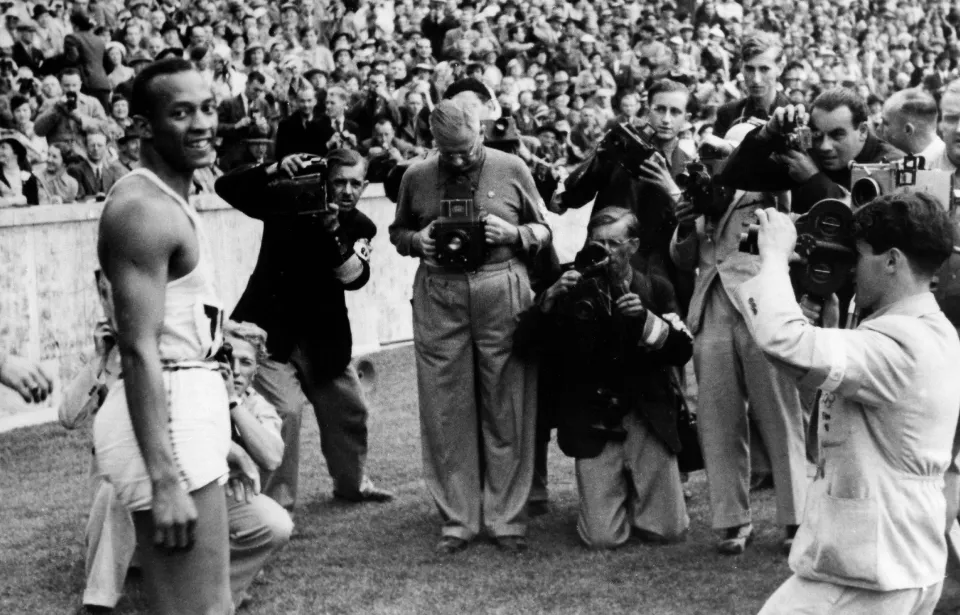 Photo: Jesse Owens, via www.thevintagenews.com
Horse Racing's Million-Dollar Guesses
Horse racing created the highest stakes for finish line judgment calls. A single decision could determine which horse won a stakes race worth hundreds of thousands of dollars, affecting breeding rights worth millions more. The pressure on judges was enormous, and the consequences of mistakes were severe.
The 1933 Kentucky Derby produced one of horse racing's most controversial finishes. Brokers Tip and Head Play crossed the finish line in what appeared to be a dead heat, but the judges awarded the victory to Brokers Tip after several minutes of deliberation. Head Play's connections protested, claiming their horse had won. The argument continued for decades because there was no photographic evidence to settle the dispute.
Similar controversies erupted regularly. The 1944 Kentucky Derby, the 1957 Preakness Stakes, and dozens of other major races were decided by judgment calls that left losing connections convinced they'd been robbed. Some horse owners hired their own photographers to document finishes, but these images weren't considered official evidence.
The Camera Revolution
Photo finish technology began appearing at major racetracks in the 1930s, but it took decades to become standard. Early cameras were expensive, complicated, and produced images that were sometimes harder to interpret than human judgment.
The breakthrough came with the development of strip cameras that captured a continuous image of the finish line rather than a single snapshot. These cameras showed exactly when each competitor crossed the line, eliminating the guesswork that had plagued sports for generations.
Track and field adopted electronic timing in the 1960s, using sensors that detected when runners broke light beams at the finish line. Suddenly, times could be measured to hundredths of seconds with perfect accuracy, and the order of finish was determined by machines rather than human eyes.
What We Learned About Our Past
The introduction of photo finish and electronic timing revealed how often human judges had been wrong. Studies of early photo finish results showed that judges made incorrect calls about 15-20% of the time in close races—a staggering error rate that meant roughly one in five tight finishes had been decided incorrectly.
Some of these errors involved margins so small that they were understandable—fractions of inches in horse racing or thousandths of seconds in track events. But others revealed mistakes that changed the outcome of major competitions, crowning the wrong winners and awarding championships to athletes who had actually finished second.
The most sobering realization was that we'd never know which historical results were wrong. Decades of sports history had been written based on human judgment that we now know was frequently inaccurate.
The End of Arguing
Modern competitive sports have essentially eliminated finish line controversies. Digital timing measures results to thousandths of seconds. High-speed cameras capture multiple angles of every finish. Computer analysis can determine winners in situations where human eyes see only a blur.
The 2009 World Championships 100-meter dash between Usain Bolt and Tyson Gay was decided by 0.13 seconds—a margin that would have been impossible for human judges to measure accurately. The electronic timing showed Bolt's 9.58 seconds and Gay's 9.71 seconds with absolute precision, eliminating any possibility of dispute.
Horse racing now uses cameras that can detect margins as small as a pixel, roughly equivalent to an inch at the finish line. The days of judges squinting at photo prints with magnifying glasses are over—computers analyze the images and determine winners with mathematical certainty.
The Human Element We Lost
There's something almost romantic about the era when races were decided by human judgment. Finish line judges became legendary figures, their reputations built on decades of split-second decisions. They were part of the competition itself—flawed, subjective, but undeniably human elements in contests that were supposed to be about pure athletic achievement.
The modern system is undoubtedly more accurate, but it's also sterile. Races are won and lost by measurements so precise that they're meaningless to human perception. We crown winners based on margins that couldn't be detected without slow-motion replay and computer analysis.
The Last Judgment Call
The final major sporting event decided by human judgment was probably a horse race in the early 1980s, as photo finish technology became universal at major tracks. The last Olympic race timed by stopwatch was likely in the 1960s, before electronic timing became mandatory for world record recognition.
Looking back, the era of eyeball finishes seems impossibly primitive—officials making million-dollar decisions based on what they thought they saw from a hundred feet away. But it was also the era when sports belonged entirely to human perception and judgment, before machines took over the job of determining who won and who lost. Whether that's progress or loss depends on how much you value perfect accuracy versus the beautiful imperfection of human observation.