When Superstars Made Grocery Store Wages: The NBA's Journey From Pocket Change to Private Jets

When Basketball Legends Lived Like Accountants
In 1968, Jerry West—the man whose silhouette became the NBA logo—signed a contract with the Los Angeles Lakers worth $25,000 per year. That same year, a mid-level manager at General Motors could expect to earn around $20,000 annually. The gap between being one of basketball's greatest players and working a decent corporate job was roughly the price of a new Chevrolet.
 Photo: Los Angeles Lakers, via static.nike.com
 Photo: Jerry West, via br.web.img3.acsta.net
Fast forward to 2024, and Jayson Tatum just signed a five-year contract worth $314 million. To put that in perspective, Tatum will earn more in his first month than Jerry West made in his entire 14-year Hall of Fame career, even after adjusting for inflation.
This transformation didn't happen gradually—it exploded across three decades in a way that left even basketball insiders speechless.
The Era of Handshake Deals and Second Jobs
Throughout the 1960s and early 1970s, NBA players operated in a financial landscape that would be unrecognizable today. Most contracts were negotiated directly between players and team owners, often during brief conversations in arena hallways. Agents were rare, salary caps didn't exist, and player leverage was virtually nonexistent.
Wilt Chamberlain, who dominated the league like no player before or since, became the first NBA player to earn $100,000 in 1965—a salary that made headlines nationwide because it seemed impossibly extravagant. Yet even Chamberlain's groundbreaking contract would be considered poverty wages by today's standards for elite players.
Many NBA players worked summer jobs to supplement their basketball income. Teachers, insurance salesmen, and construction workers—these were common off-season occupations for men who spent their winters battling for NBA championships. Bill Russell, who won 11 championships with the Boston Celtics, worked as a bank teller during summers early in his career.
The financial uncertainty was so severe that players often negotiated year-to-year contracts because teams couldn't afford long-term commitments. Even established stars lived with the knowledge that their basketball careers could end at any moment, leaving them to find regular jobs like everyone else.
The Television Revolution Begins
Everything started changing in the late 1970s when television executives realized that basketball could attract national audiences. The 1979 NCAA championship game between Magic Johnson's Michigan State and Larry Bird's Indiana State drew the largest basketball television audience in history, proving that the sport could generate serious advertising revenue.
When Magic and Bird entered the NBA the following season, their rivalry helped transform professional basketball from a niche sport into mainstream entertainment. Television contracts grew larger, arena attendance increased, and suddenly NBA teams had revenue streams their predecessors couldn't have imagined.
But the salary explosion didn't happen immediately. Magic Johnson's rookie contract with the Lakers was worth $600,000 per year—certainly more than Jerry West had earned, but still modest compared to what was coming. The real transformation required one more crucial ingredient: player power.
The Birth of Modern Player Leverage
The formation of a strong players' union in the 1980s fundamentally altered the NBA's economic landscape. Led by players like Magic Johnson and Larry Bird, the union negotiated collective bargaining agreements that gave players a guaranteed percentage of league revenue—meaning that as the NBA grew richer, players would automatically share in that prosperity.
This revenue-sharing model proved revolutionary. When television contracts exploded in value, player salaries exploded proportionally. When international markets opened up and merchandise sales skyrocketed, players benefited directly. For the first time in NBA history, the league's biggest stars had guaranteed pathways to wealth that matched their value to team revenues.
The introduction of free agency in the 1980s created competitive bidding for elite players, driving salaries even higher. Teams that had previously controlled player careers through restrictive contracts now had to compete for talent in an open market.
The Michael Jordan Effect
Michael Jordan's career perfectly illustrates the NBA's salary transformation. His rookie contract in 1984 paid him $550,000 per year—good money, but not extraordinary. By the time he signed his final contract with the Chicago Bulls in 1997, he was earning $33 million annually, making him the highest-paid athlete in team sports history at that time.
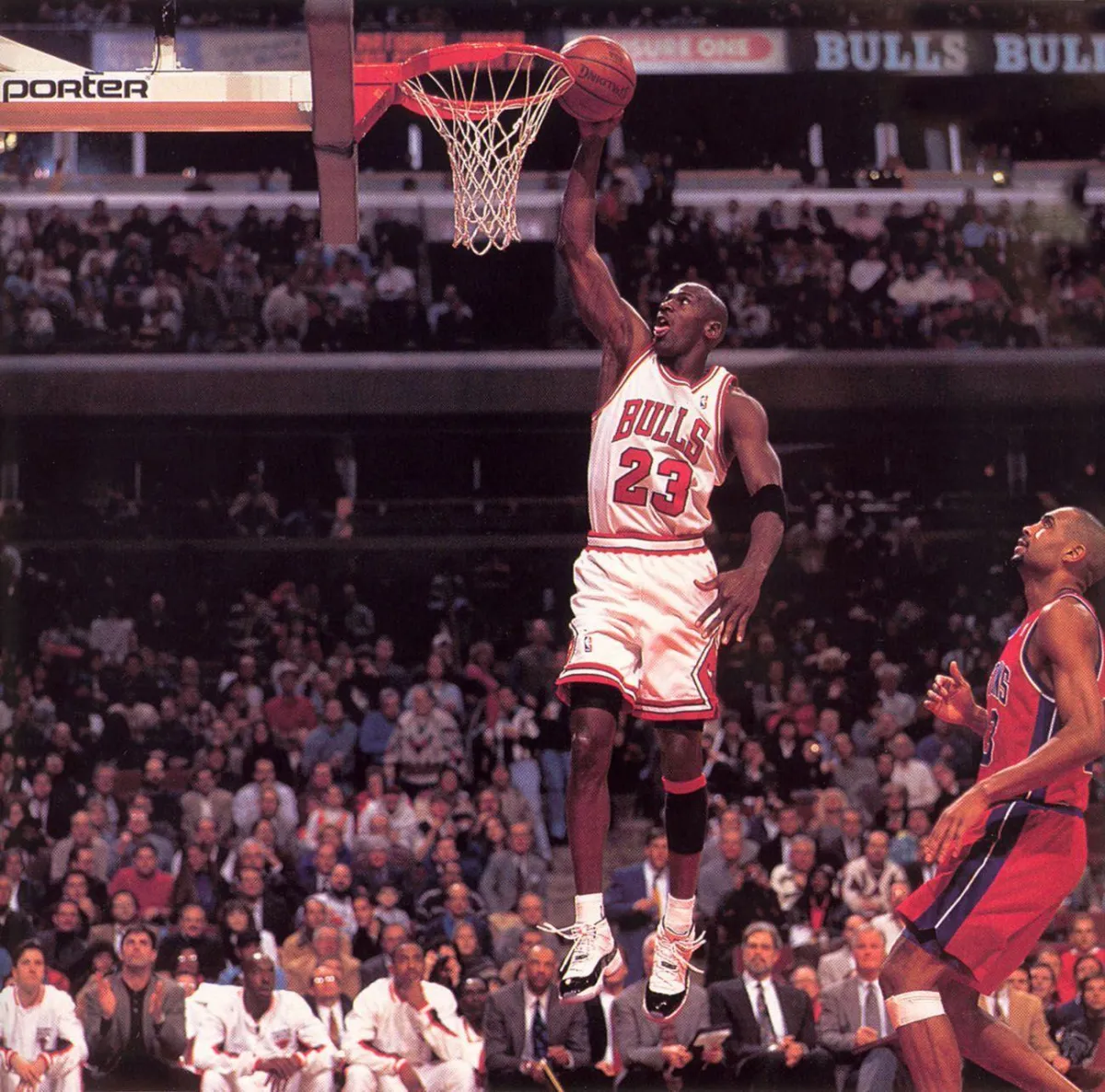 Photo: Michael Jordan, via wallpaperaccess.com
But Jordan's impact extended far beyond his own salary. His global popularity helped the NBA become an international entertainment brand, opening revenue streams that previous generations of players couldn't have conceived. Suddenly, NBA games were broadcast in dozens of countries, merchandise sales reached every continent, and the league's most marketable stars became global celebrities.
This international expansion created a feedback loop that continues today: as the NBA's global reach expanded, league revenues grew exponentially, which drove player salaries higher, which attracted more elite athletes, which made the product even more marketable worldwide.
The Modern Salary Stratosphere
Today's NBA salary structure would seem like science fiction to players from the 1970s. The current maximum salary for a superstar player approaches $60 million per year, while even role players routinely earn more than entire rosters from the pre-television era.
Jaylen Brown's recent $304 million contract with the Boston Celtics represents more guaranteed money than the combined career earnings of every NBA player who retired before 1980. Stephen Curry has earned over $400 million in NBA salaries alone—not including endorsements—during his career.
The league minimum salary for rookies in 2024 is approximately $1.1 million, meaning that the worst player on the worst team earns more than Magic Johnson made during his MVP seasons. This isn't just inflation—it represents a fundamental transformation in how American society values elite athletic entertainment.
The Ripple Effects of Wealth
This salary explosion transformed not just individual players' lives, but the entire culture around professional basketball. Modern NBA stars don't work summer jobs—they invest in business ventures, start entertainment companies, and build personal brands worth hundreds of millions of dollars.
The financial security also changed how players approach their careers. Instead of playing through injuries because they couldn't afford to miss games, today's players can prioritize long-term health and performance. Load management, specialized training, and cutting-edge medical care are now standard practices that were unimaginable when players earned middle-class wages.
Younger players entering the league now hire teams of financial advisors, business managers, and investment specialists before they play their first professional game. The NBA has become as much about wealth management as basketball skill.
What the Numbers Really Mean
The NBA's salary evolution reflects broader changes in American entertainment economics. Television and digital media created global audiences worth billions of dollars in advertising revenue. International markets expanded the potential customer base from millions to billions. Social media allowed individual players to build personal brands independent of their teams.
This transformation also reveals how undervalued elite athletic talent was for decades. Those 1970s players who worked summer jobs weren't earning modest salaries because basketball wasn't valuable—they were earning modest salaries because the systems didn't exist to capture and distribute the sport's true economic value.
Today's massive contracts represent a more accurate reflection of what elite basketball talent is actually worth in a global entertainment marketplace. When Nikola Jokic signs a $270 million contract, that number reflects his ability to generate television ratings, sell merchandise, and attract paying customers in dozens of countries worldwide.
The journey from Jerry West's $25,000 contract to Jayson Tatum's $314 million deal isn't just about salary inflation—it's about the complete transformation of professional sports from local entertainment into global economic powerhouses. The players finally getting paid like the superstars they always were.